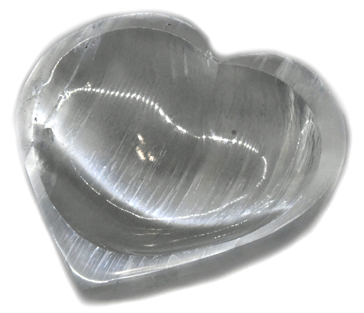
Selenite Heart Bowl (4″)
$16.45
A Heart of Moon-White Stone
A heart-shaped selenite bowl just under 4″ across, a soft place for gemstone jewelry and a natural centerpiece for love and self-love altars.
Quick Uses
- Love Altar: Set it at the center of a love altar holding rose quartz and dried rose petals.
- Jewelry Rest: Rest the jewelry you wear to attract love in it overnight.
- Reconciliation: Place a photo of you both beneath it with a pink candle beside.
How to Use It
Witchcraft & Folk Magick
- Fill it with dried rose petals and a rose quartz, and light a pink candle beside it each Friday.
- Rest your glamour jewelry in it the night before you want to be noticed.
Hoodoo & Rootwork
- Place a name paper of you and your lover under the bowl with sugar and rose petals in it for a sweetening.
- Keep a love-drawing lodestone pair in it, fed with a little magnetic sand each Friday.
Ceremonial & Occult Magick
- Use it on a Venus altar on Fridays as the vessel for copper or rose quartz talismans.
- Rest a consecrated Venus talisman in it between wearings.
Demonology & Black Magick
- Hold offerings of rose and honey cake crumbs for a spirit of love or lust whose aid you have asked.
- Keep a love-spirit’s sigil beneath the bowl with your charm in it as a sign of the agreement.
A Simple Working
- On a Friday, write your name and your beloved’s on a small slip of paper.
- Place it under the selenite heart.
- Fill the bowl with dried rose petals and a pinch of sugar.
- Light a pink chime candle beside it.
- Speak sweetly of the love you want to grow or return.
- Repeat each Friday with a fresh candle.
Pairs Well With
- Pink Chime Candles: For love and reconciliation.
- Rose Petals: A classic love herb for the bowl.
- Rose Quartz: A gentle love stone to rest in it.
- Lodestones: A pair for drawing lovers together.
What You Receive
One heart-shaped selenite bowl, almost 4″ across the lip and almost 1 1/4″ tall. Size and shape vary, with natural cracks, lines and inclusions.
Origin & Lore
Selenite takes its name from Selene, the Greek goddess of the moon, a nod to its soft, pearly glow. It is a clear crystalline form of gypsum, and much of the selenite carved for altar ware today comes from Morocco.
The heart shape as a symbol of love became common in medieval and Renaissance Europe and is now found on love altars everywhere. Paired with the moon-white of selenite, it makes a gentle vessel for love and self-love work.
Did You Know?
The familiar heart shape began appearing as a symbol of love in European art in the Middle Ages.
Related products