

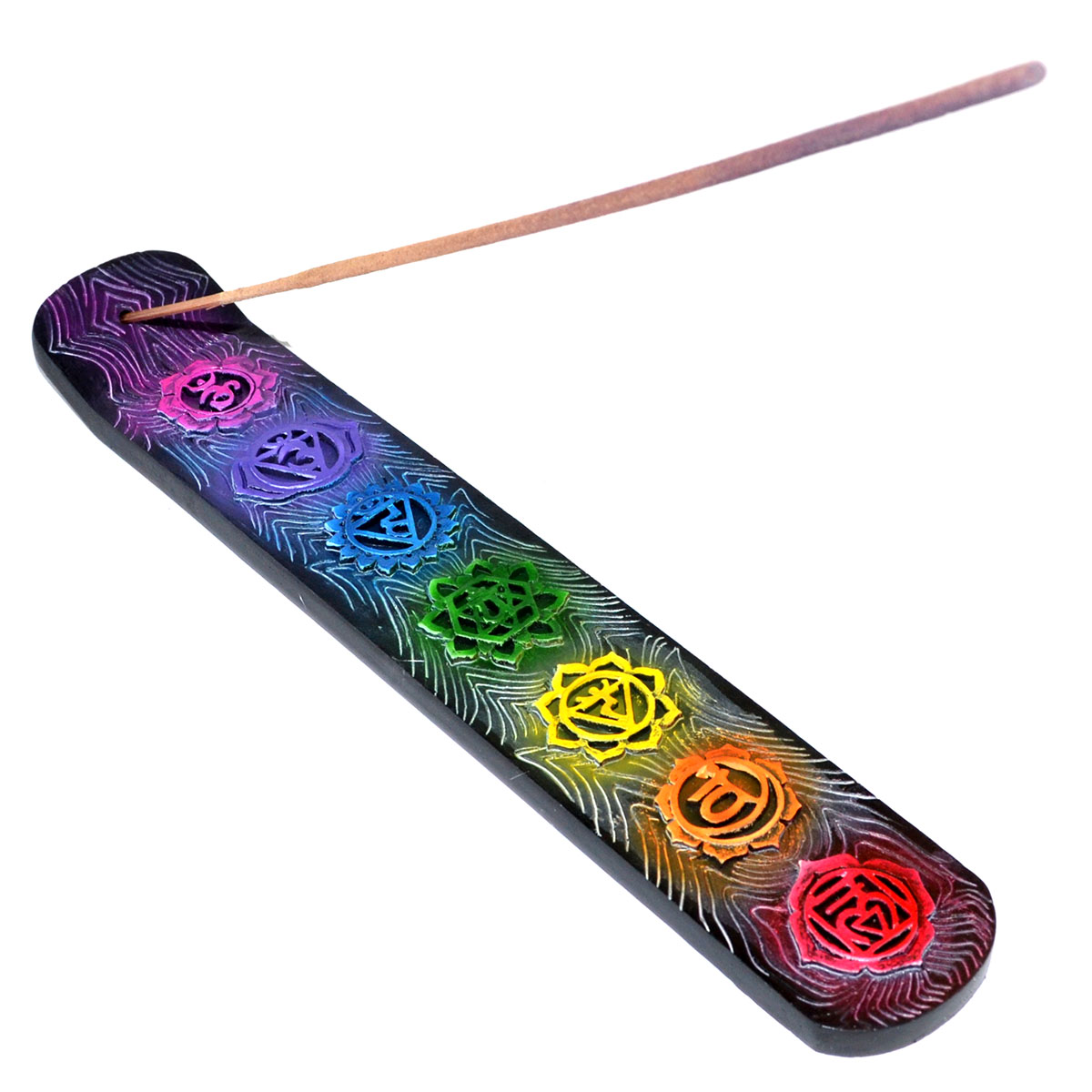
Seven Chakra Incense Burner (9 3/4″)
$16.45
Seven Centres in One Line of Smoke
A colourful resin stick incense holder showing the seven chakra symbols in a flowing line, used by practitioners who like to work up the body’s energy centres in meditation and trance.
Quick Uses
- Meditation Focus: Burn a stick and let your eye travel the symbols from root to crown.
- Room Clearing: Burn cleansing incense in it after a reading or a heavy visit.
- Altar Ash Catcher: Lay it on any altar to catch the ash from stick incense.
How to Use It
Witchcraft & Folk Magick
- Burn a stick while you sit before it, moving your attention up through each symbol before a ritual.
- Use it on your healing altar, burning incense while you light a candle for someone’s spiritual wellbeing.
Ceremonial & Occult Magick
- Use it as a focus in rising-on-the-planes exercises, imagining your awareness climbing the seven centres.
- Match the incense to the planetary or elemental force you are invoking and burn it as you meditate.
Demonology & Black Magick
- Burn a stick before evocation and settle your awareness from root to crown to steady yourself.
- Burn banishing incense in it after spirit work while you breathe the residue out of each centre.
A Simple Working
- Sit in a quiet room and light a white chime candle.
- Light a stick of sandalwood incense in the holder.
- Rest your eye on the first symbol at the base and breathe slowly three times.
- Move up one symbol at a time, holding each for three breaths.
- At the crown symbol, sit in silence until the stick has burned halfway.
- Write down any images or messages that came to you.
Pairs Well With
- Sandalwood Incense Sticks: A soft scent for meditation and trance.
- White Chime Candles: A simple light for a quiet working.
- Clear Quartz: To hold in your hand while you meditate.
- Journal: To record what you see in trance.
What You Receive
One resin stick incense holder featuring the seven chakra symbols, measuring 1.65″ x 9.5″.
Origin & Lore
The chakras were first described in Hindu and Buddhist tantric texts as centres of subtle energy along the body, used as points of focus in meditation and yogic practice. Different texts give different numbers of chakras.
The seven-chakra system most people know in the West spread largely through Arthur Avalon’s The Serpent Power, published in 1919, a translation and study of Sanskrit tantric texts. Western occultists and later New Age writers then linked the seven centres to the rainbow colours.
Did You Know?
The seven-chakra system best known in the West owes much of its spread to The Serpent Power, a study of tantric texts published in 1919.
Related products


