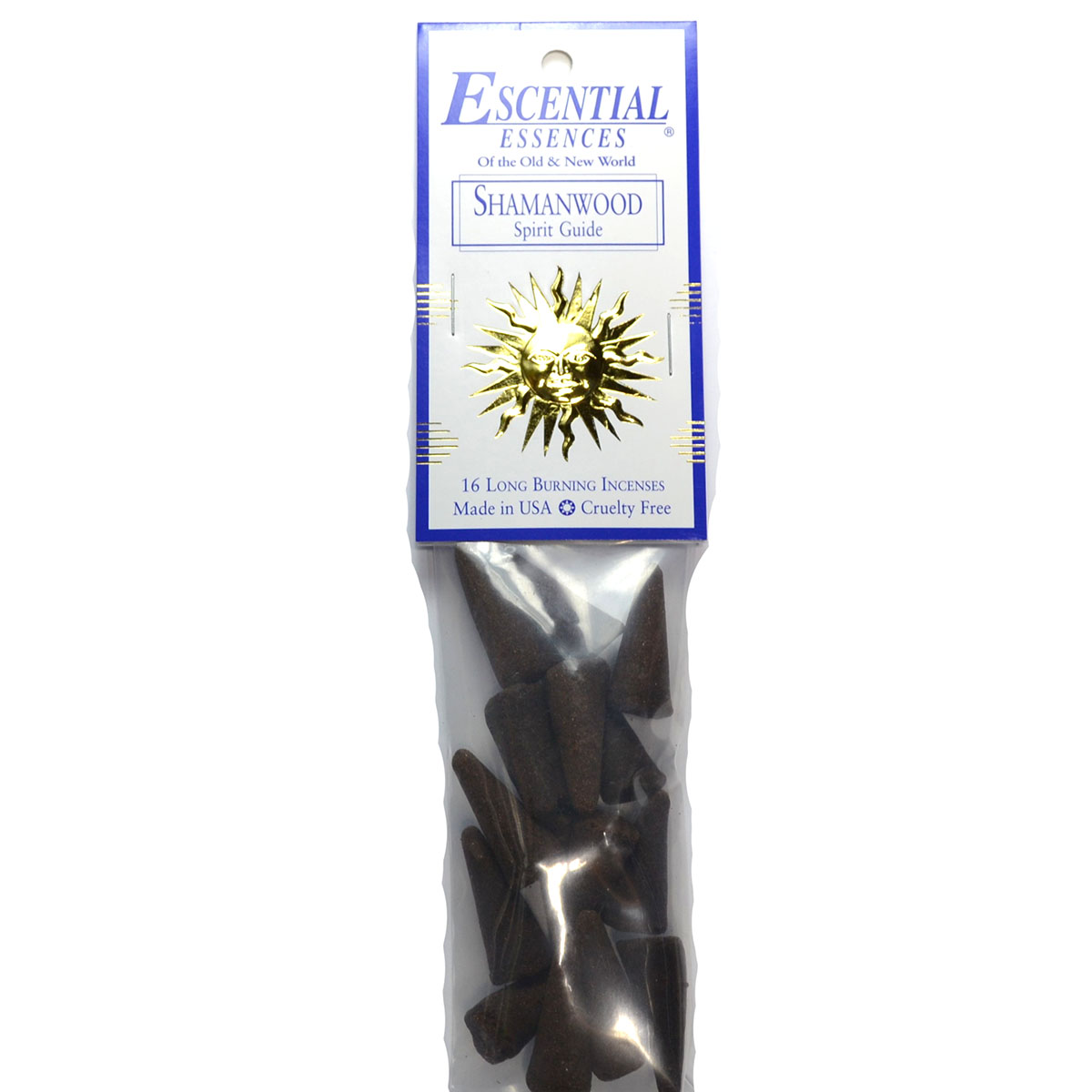
Shamanwood Incense Cones
$6.55
Incense for Calling a Spirit Guide
A woodsy cone incense made for spirit guide work, burned when you want contact with the helpers who walk beside you.
Quick Uses
- Guide Contact: Light a cone before trance or drumming and ask your guide to come forward.
- Journey Prep: Burn it before a guided journey or astral session to mark the threshold.
- Ancestor Offering: Set a cone on the ancestor shelf as a smoke offering.
How to Use It
Witchcraft & Folk Magick
- Burn a cone while drumming or rattling to open a spirit journey, and let it burn out as your signal to return.
- Hold a feather or stone in the smoke and ask it to become a link to your spirit guide.
Hoodoo & Rootwork
- Burn a cone on the ancestor altar with a glass of water and a white candle when asking the dead for guidance.
- Smoke your hands before laying out cards or bones for a spirit reading.
Ceremonial & Occult Magick
- Use it as the scent of the astral temple, burning it each time you visualise entering that inner space.
- Burn it before scrying so the smoke becomes your cue to shift into a receptive state.
Demonology & Black Magick
- Offer a cone to a spirit before asking for its name or sign, and record what you sense in the smoke.
- Burn it at a graveside altar or with grave dirt when calling on the dead for a working.
A Simple Working
- Sit somewhere quiet at night with a notebook beside you.
- Light a Shamanwood cone and a single white tealight.
- Breathe slowly and picture a path leading down into a forest.
- Ask for your spirit guide to meet you on the path.
- Note any animal, figure, word or feeling that comes.
- Thank the guide, extinguish the tealight and write down everything before you sleep.
Pairs Well With
- Frame Drum or Rattle: To carry a steady rhythm into trance.
- Ancestor Candles: For the shelf where you honour the dead.
- Mugwort: A classic herb for dreams and spirit sight.
- Scrying Mirror: To read what the guide shows you.
What You Receive
One package of 16 long-burning incense cones in the Shamanwood blend, made in the USA with cosmetic-grade ingredients and no animal testing. A woodsy spirit guide blend.
Origin & Lore
The word shaman comes from the Evenki people of Siberia and reached European languages through Russian. It described a spirit worker who travelled in trance to meet spirits on behalf of the community.
Burning plants and resins to make smoke for spirits is found across countless cultures, from Siberian juniper fumigation to the copal of Mesoamerica. Smoke has long been seen as a road that carries prayers and offerings to the unseen.
Did You Know?
The word shaman comes from the Evenki language of Siberia and reached English by way of Russian.
Related products