



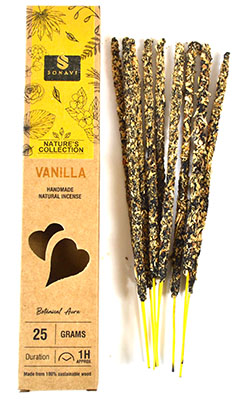
Vanilla Incense Sticks (25g)
$3.25
Sweet Vanilla for Attraction
A handmade natural vanilla incense with a warm, sweet scent, burned by practitioners for attraction, sweetening and a cosy, welcoming home.
Quick Uses
- Sweeten a Situation: Burn a stick while thinking kindly of someone you want to soften toward you.
- Date Night: Light one in the room before a partner arrives.
- Cosy Home: Burn a stick on cold evenings for a warm, welcoming atmosphere.
How to Use It
Witchcraft & Folk Magick
- Burn it during a glamour spell at the mirror to feel sweet and magnetic.
- Light a stick while baking for a loved one, as a kitchen witch sweetening.
Hoodoo & Rootwork
- Burn it while working a honey or sugar jar to sweeten a lover, boss or family member.
- Smoke a pink candle with it before dressing it for reconciliation work.
Ceremonial & Occult Magick
- Use it in Venusian rites as a warm, sweet incense.
- Burn it in workings for beauty, art and pleasure.
Demonology & Black Magick
- Offer a stick to a spirit that enjoys sweet scents, especially when asking a favour.
- Burn it alongside a sweet offering such as sugar or honey on the spirit’s dish.
A Simple Working
- Write the name of the person you want to sweeten on a small slip of paper.
- Put the paper in a small jar and cover it with sugar or honey.
- Light a vanilla stick and pass the closed jar through the smoke.
- Set a small pink candle on the lid and light it from the stick.
- Speak kindly of the person while the candle burns down.
- Repeat with a fresh candle and stick each Friday.
Pairs Well With
- Vanilla Pods: To add to love sachets and sweetening jars.
- Pink Chime Candles: For sweetening and reconciliation workings.
- Ragini Kakubha Incense: A sandalwood, rose and vanilla blend for romance.
- Rose Quartz: A gentle love stone for the honey jar’s lid.
What You Receive
One 25 gram pack of handmade natural vanilla incense sticks, made in India. Each stick burns for approximately one hour.
Origin & Lore
Vanilla comes from the cured seed pods of Vanilla planifolia, an orchid native to Mexico and Central America, where it was cultivated by the Totonac and later valued by the Aztecs. It reached Europe in the 16th century and became one of the most loved scents in perfumery.
In modern folk magick and conjure, vanilla is worked for love, attraction and sweetening, prized for its warm, comforting sweetness.
Did You Know?
Vanilla grown outside Mexico must usually be pollinated by hand, a technique worked out on the island of Reunion in 1841.
Related products


