



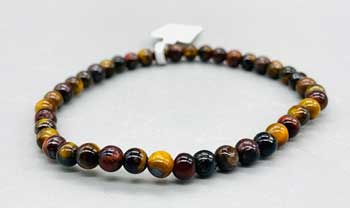
Tri-Colour Tiger Eye Bead Bracelet (4mm)
$4.35
Three Eyes of the Tiger
A one size fits most bracelet of 4mm tiger eye in three colours, combining the energies of the tiger eye family for courage, watchfulness and gain.
Quick Uses
- Watchful Eye: Wear it as a ward that keeps an eye out when you cannot.
- Bold Moves: Put it on before negotiations or asking for what you are owed.
- Money Focus: Wear it while you budget, invoice or plan new income.
- Balance: Wear it when you need both fire and calm in one day.
How to Use It
Witchcraft & Folk Magick
- Charge it in sunlight and wear it on market days or when selling your craft.
- Wear it in solar rituals at the solstices, as the golden eye has long been tied to the sun.
Hoodoo & Rootwork
- Dress it with a drop of money-drawing oil and wear it when collecting debts.
- Wear it with an eye-shaped charm or protection bag against the evil eye.
Ceremonial & Occult Magick
- Use it as a talisman of the Sun and Mars, balancing confidence with action.
- Wear it during concentration practice, letting the shifting light of the beads hold your gaze.
Demonology & Black Magick
- Wear it as a watchful guardian during spirit contact, an eye that keeps your circle observed.
- Hold it while working a binding on someone who works against you, then cleanse it straight after.
A Simple Working
- Lay the bracelet in sunlight for an hour.
- Light a gold or orange chime candle beside it.
- Draw a simple eye on a slip of paper and set it under the candle.
- Ask for watchfulness, nerve and good returns.
- Let the candle burn down.
- Wear the bracelet and keep the paper eye in your wallet.
Pairs Well With
- Gold Chime Candles: Suit solar success and money workings.
- Money Drawing Oil: Dresses the beads for prosperity spells.
- Evil Eye Charm: Echoes tiger eye’s watchful, protective role.
- Pyrite Tumbled Stone: A bright money stone that pairs with golden tiger eye.
What You Receive
One one size fits most bracelet made from natural tiger eye beads in three colours, including red, each 4mm, strung on a durable elastic band. Bead sizes may vary slightly.
Origin & Lore
Tiger eye gets its silky moving band of light, called chatoyancy, from quartz that formed around fibrous minerals. The best known sources are in South Africa.
The stone is commonly sold in three colours: golden, red, and the blue-grey variety known as hawk’s eye. Red tiger eye is often produced by gently heating golden stone. In modern practice each colour carries its own flavour of courage, protection and focus.
Did You Know?
The word chatoyancy, used for tiger eye’s moving band of light, comes from the French chat, meaning cat, after the slit of a cat’s eye.
Related products


