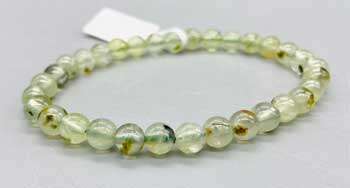
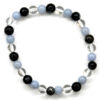
Prehnite Bead Bracelet (6mm)
$7.65
Calm Through Change
A one size fits most bracelet of 6mm prehnite, a calming, transformational stone worn to harmonise your surroundings, sharpen memory and carry you through change.
Quick Uses
- Home Harmony: Wear it while tidying and blessing your home.
- Decluttering: Wear it when clearing out belongings you no longer need.
- Memory: Wear it during study to help recall what you learn.
- Times of Change: Wear it through moves, new jobs or endings.
How to Use It
Witchcraft & Folk Magick
- Wear it during a house cleansing, carrying it room to room as you sweep and bless.
- Charge it under a waning moon and wear it while letting go of old belongings and habits.
Hoodoo & Rootwork
- Dress it with a drop of peaceful home oil and wear it when family tension rises.
- Wear it while working a floor wash for a calm, harmonious home.
Ceremonial & Occult Magick
- Use it as a focus stone for memory work and study of correspondences.
- Wear it in rites of transformation to stay calm as the old gives way to the new.
- Wear it during divination to keep intuition calm and readings orderly.
Demonology & Black Magick
- Wear it after spirit work to calm your field and return to everyday life.
- Hold it when closing a long working with a spirit, as a stone of transition and peace.
A Simple Working
- Choose one cluttered corner of your home.
- Light a light green or white chime candle nearby.
- Wear the bracelet as you clear and sort the space.
- Set aside anything you no longer need to give away.
- Sprinkle a little sea salt in the cleared spot and sweep it out.
- Let the candle burn down in the newly cleared space.
Pairs Well With
- White Chime Candles: Suit peace, cleansing and blessing in the home.
- Sea Salt: Clears space after decluttering work.
- Peaceful Home Oil: Dresses the bracelet for household harmony.
- Nephrite Jade Bracelet: Another green stone of calm that stacks well.
What You Receive
One one size fits most bracelet made from natural prehnite beads, each 6mm, strung on a durable elastic band. Bead sizes may vary slightly.
Origin & Lore
Prehnite is a pale green calcium aluminium silicate that was brought to Europe from the Cape of Good Hope in the late eighteenth century. It is often described as the first mineral to be named after a person, the Dutch officer who brought it from South Africa.
In modern practice it is valued as a stone of calm and transformation, a gentle companion through life changes.
Did You Know?
Prehnite often grows in rounded, bubbly clusters known as botryoidal forms, from the Greek for a bunch of grapes.
Related products