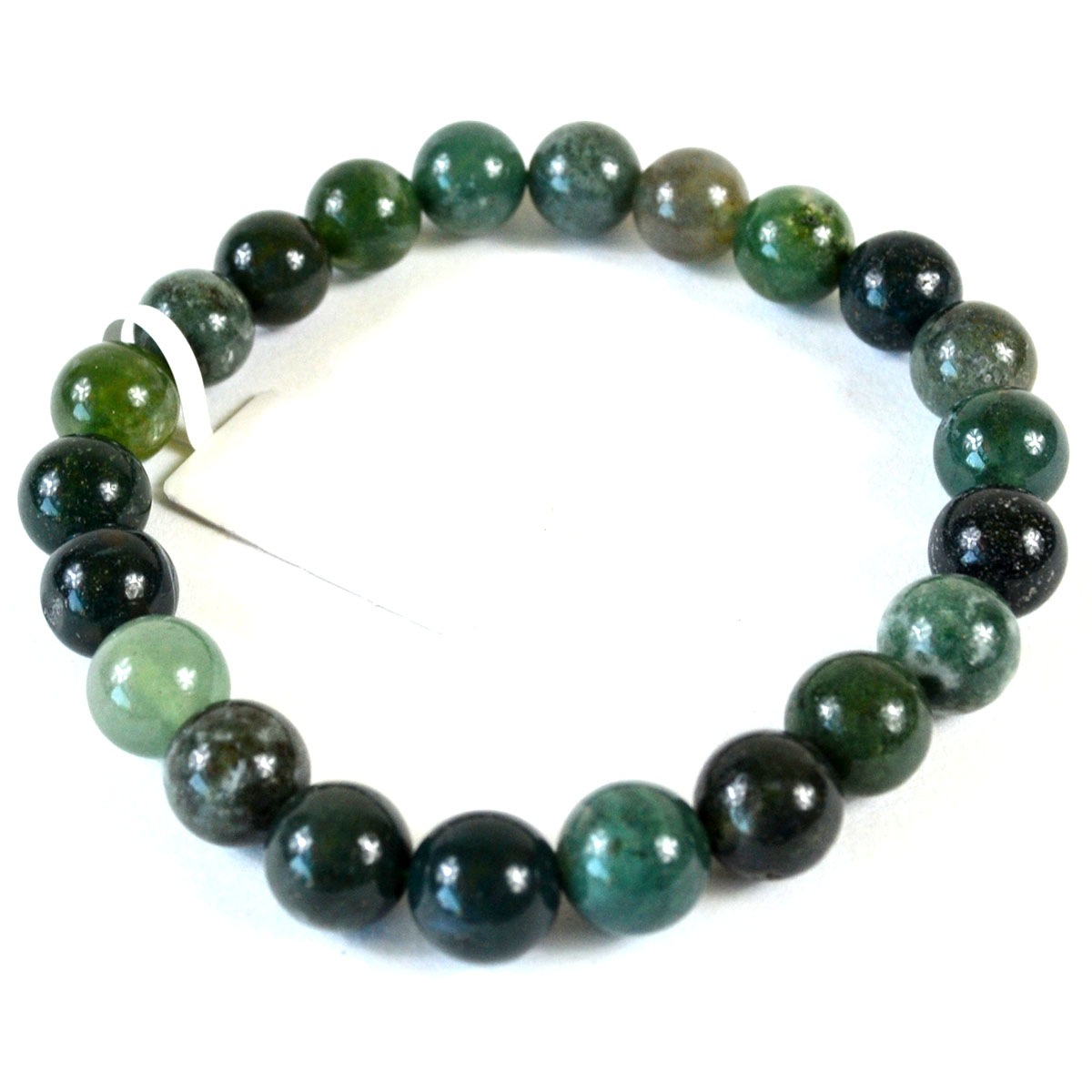

Green Moss Agate Bead Bracelet (8mm)
$5.45
The Gardener’s Stone
A beaded bracelet of 8mm green moss agate, a stone of growth and new beginnings that practitioners wear for grounding, abundance and a close bond with nature.
Quick Uses
- New Beginnings: Put it on the first day of a fresh start, a new home, job or season.
- Garden Charm: Wear it while sowing seeds or tending plants.
- Abundance: Rest it on your money jar overnight on a new moon.
- Nature Walk: Wear it outdoors and touch it when you greet the land.
How to Use It
Witchcraft & Folk Magick
- Bury it briefly in the soil of a new garden bed, then dig it up and wear it to bless the growing season.
- Use it in spring equinox rites for growth, fresh starts and fertile land.
Hoodoo & Rootwork
- Keep it in a green mojo bag work with alfalfa and a silver coin for slow, steady abundance.
- Lay it beside a potted money plant dressed with a drop of Money Drawing Oil on the pot rim.
Ceremonial & Occult Magick
- Set it in the north of the circle as a stone of Earth and green growth.
- Wear it during Venus workings, linked with green and with fertility of the land.
Demonology & Black Magick
- Offer it at a shrine for land spirits and nature spirits as a token of respect before asking their help.
- Wear it when making contact with spirits of a particular place, so you are marked as one who honours the land.
A Simple Working
- On a new moon, fill a small pot with fresh soil.
- Plant a seed while naming the new beginning you want to grow.
- Lay the bracelet around the pot and light a green votive candle beside it.
- Water the seed and say: as this grows, so grows my path.
- Wear the bracelet daily and tend the seed each day.
- When the seedling sprouts, give thanks and keep tending both plant and plan.
Pairs Well With
- Green Chime Candles: Suit growth and abundance workings.
- Alfalfa: A rootwork herb kept for plenty in the home.
- Money Drawing Oil: Dress the beads for prosperity spells.
- Tree Agate: A close cousin for nature and garden magick.
What You Receive
One beaded bracelet of 8mm green moss agate beads.
Origin & Lore
Moss agate has long been known as the gardener’s stone, carried for good harvests, growth and abundance, and modern practitioners wear it for grounding, new beginnings and a renewing bond with nature.
It is not a banded agate at all but a chalcedony with green, branching mineral inclusions that look like moss or tiny plants. In older trade it was often called mocha stone, after the port of Mocha in Yemen.
Did You Know?
The fern-like patterns in moss agate are mineral growths called dendrites, not fossil plants, though they look remarkably like moss.
Related products