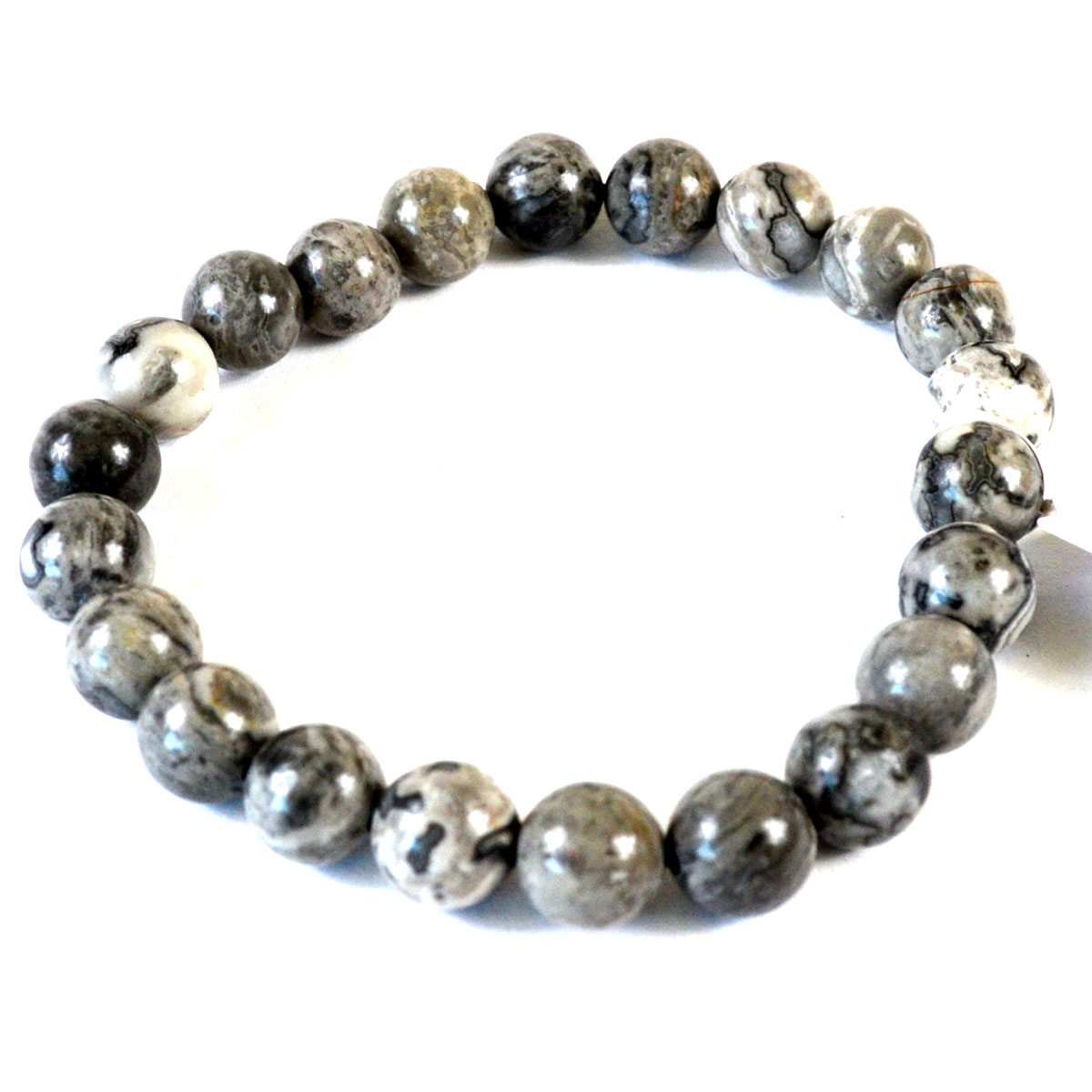
Map Jasper Bead Bracelet (8mm)
$3.25
Landscapes Written In Stone
An 8mm map jasper beaded bracelet in earthy tones with intricate patterns that resemble old landscapes, worn by practitioners for grounding, stability and strength.
Quick Uses
- Grounding: Wear it after travel or a long day to come back to yourself.
- Strength: Press the beads when you need to stand firm in a decision.
- Journey Charm: Wear it on trips as a link to home ground.
- Ancestral Land: Hold it while you think of the places your family came from.
How to Use It
Witchcraft & Folk Magick
- Use it in a spell for safe journeys, laying it across a road map beside a white candle.
- Wear it while working with the spirits of your local land, as a token of belonging there.
Hoodoo & Rootwork
- Keep it on the ancestor altar with a small dish of earth from a family home place.
- Dress it with a drop of Steady Work Oil and wear it for stability during unsettled times.
Ceremonial & Occult Magick
- Gaze at the map-like patterns as a focus for meditation before astral or pathworking journeys.
- Hold it when you return from trance work to ground yourself firmly in the body.
Demonology & Black Magick
- Wear it during spirit travel or necromantic rites as an anchor that leads you back.
- Place it at the edge of the circle to mark the ground you claim as yours during evocation.
A Simple Working
- Take a pinch of soil from your doorstep or garden.
- Place it in a small dish on your altar with the bracelet on top.
- Light a brown candle and say the names of places that feel like home.
- Ask the land to hold you steady while you travel or change.
- Leave the bracelet on the soil until the candle is finished.
- Return the soil to where you took it from and wear the bracelet.
Pairs Well With
- Brown Chime Candles: Suit earth, home and stability spells.
- Mugwort: A traditional herb for trance and journeying work.
- Hematite: Adds a strong grounding anchor alongside map jasper.
- Ancestor Altar Supplies: Map jasper sits well among photos and family keepsakes.
What You Receive
One beaded bracelet of 8mm map jasper beads in natural earthy tones.
Origin & Lore
Jaspers with scenic patterns have long been prized as grounding stones of the earth, and map jasper is worn in modern practice for stability, strength and a deeper connection to the land.
Map jasper is a trade name for jaspers whose patterns look like coastlines, rivers and hills, similar to the picture jaspers that collectors value for their landscape scenes. Because each pattern is natural, no two beads look the same.
Did You Know?
Picture and landscape jaspers form when iron and other minerals stain fine silica-rich sediments in patterns that can resemble painted scenes.
Related products