



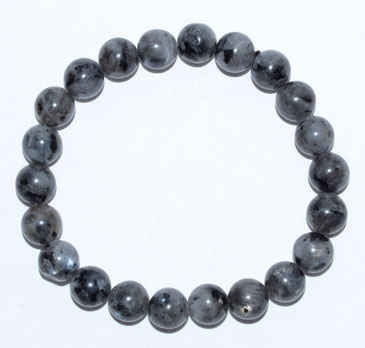
Larvikite Bead Bracelet (8mm)
$3.25
Storm-Grey Stone Of The North
An 8mm larvikite bracelet of polished deep grey beads with flashes of silver, worn by practitioners for grounding, protection and a clear mind.
Quick Uses
- Protection: Wear it as a quiet shield on days you meet many people.
- Clear Mind: Watch the silver flashes for a moment to settle racing thoughts.
- Grounding: Put it on after trance or dream work to come fully back.
- Night Work: Wear it during moonlit rites to stay sharp and steady.
How to Use It
Witchcraft & Folk Magick
- Use it in a protective spell on a waning moon, set beside a grey or black candle.
- Wear it during Norse-inspired rites as a stone born in Norway.
Hoodoo & Rootwork
- Dress it with Fiery Wall of Protection Oil and wear it in hostile places.
- Add it to a mojo bag work with rue and salt to ward off the evil eye.
Ceremonial & Occult Magick
- Gaze at its flashes as an aid to clearing the mind before scrying or trance.
- Wear it during banishing rituals as a grounded, protective anchor.
Demonology & Black Magick
- Wear it during evocation to keep your mind clear and grounded while spirits are present.
- Lay it at the edge of the circle as a protective guard stone.
A Simple Working
- Light a grey or black candle on a waning moon.
- Hold the bracelet and tilt it in the candlelight until the silver flashes catch.
- Picture those flashes as a shining shield around your body.
- Say: steady stone, bright shield, guard me now.
- Put on the bracelet and sit quietly while the candle burns.
- Wear it for the rest of the moon’s waning phase.
Pairs Well With
- Black Chime Candles: Suit protective and banishing work.
- Rue: A traditional herb against the evil eye.
- Labradorite: Shares the same kind of flashing feldspar sheen.
- Mugwort: Pairs with the bracelet for trance and dream work.
What You Receive
One bracelet of 8mm polished larvikite beads in deep grey with silver flashes. Each bracelet is unique, with natural variations in the stone.
Origin & Lore
Larvikite is worn in modern crystal practice as a grounding and protective stone that supports mental clarity, and many practitioners also reach for it in trance and dream work.
Larvikite is an igneous rock named after the town of Larvik in southern Norway, where it is quarried. Its shimmering flashes come from feldspar crystals, and polished slabs of it face buildings around the world. It was named Norway’s national rock in 2008.
Did You Know?
Larvikite was chosen as Norway’s national rock in 2008 and is quarried around the town of Larvik, which gives it its name.
Related products


