



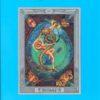
Tea Leaf Fortune Cards by Rae Hepburn
$36.25
The old art of reading the leaves, in 200 cards
A divination set of 200 illustrated cards showing the traditional tea leaf symbols, with a guidebook for reading leaves or cards.
Quick uses
- Card readings: draw symbol cards to read a question.
- Tea leaf study: learn the meaning of each shape.
- Combined readings: read leaves in the cup alongside the cards.
In stock
How to Use It
Divination & Spirit Work
- Draw cards from the 200 traditional tea leaf symbols to answer a question, just as a reader would interpret shapes in the cup.
- Use the cards as a reference while you read a real teacup, matching the shapes you see.
- The 98-page guidebook explains how to divine fortunes with tea leaves or the cards.
Witchcraft & Folk Magick
- Tea leaf reading is a cottage craft of the kitchen witch, passed down in homes across Britain and Ireland.
- Brew loose tea before a reading and treat it as part of the rite.
- Pull a single card each morning and watch for its symbol in the day ahead.
Demonology & Black Magick
- Practitioners read the cards after making an offering to a spirit, taking the symbol drawn as its reply.
- Draw a card for each day of a working to watch how a curse, pact or petition is unfolding.
- Read the leaves of tea poured as an offering at a spirit’s altar for the message left behind.
A Simple Working
- Brew a cup of loose leaf tea and drink it slowly while thinking on your question.
- Leave a little liquid, swirl the cup three times and turn it upside down onto the saucer.
- Read the shapes in the cup, near the rim for soon and near the base for later.
- Draw three cards to confirm or expand on what you saw.
- Write the symbols and their meanings in your journal.
Pairs Well With
- Loose leaf tea: for traditional cup readings.
- Tea cup and saucer: kept for divination.
- Mugwort: to open intuition.
- Journal: to record symbols and outcomes.
- Candles: to light the reading.
What You Receive
One Tea Leaf Fortune Cards set by Rae Hepburn: 200 illustrated cards and a 98-page guidebook.
Origin & Lore
Tasseography, reading tea leaves, grew popular in Europe after tea arrived in the 17th century, and it drew on older traditions of reading wax, lead and coffee grounds.
Victorian fortune tellers made it a parlour art, and printed fortune telling cups with symbols around the rim were sold as guides.
Did You Know?
The word tasseography comes from the French tasse, meaning cup, and the Greek suffix for writing or drawing.
| Weight | 1.60 lbs |
|---|
Related products


All Herbs
