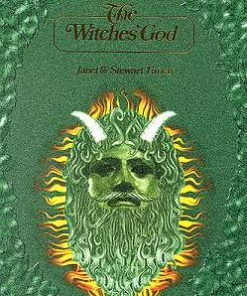
Pagan Path by Farrar, Farrar & Bone
$18.15
A study of the Pagan path in the modern world
A compilation of Pagan knowledge and daily living today, for understanding the path of a Pagan in the modern world.
Quick uses
- Study: learn how Pagans live and practise today.
- Foundations: ground your craft in the wider Pagan world.
- Reflection: use it as a reading for your own path.
In stock
How to Use It
Witchcraft & Folk Magick
- The book gathers an extensive compilation of Pagan knowledge and daily living today.
- Read it alongside your practical work to understand the wider community your craft belongs to.
Ceremonial & Occult Magick
- Understanding the Pagan revival helps ceremonial practitioners see how ritual, myth and nature religion meet.
- Use it to place your own practice within the living traditions around you.
Demonology & Black Magick
- Many spirits named as demons in the grimoires were once the gods of older Pagan peoples, such as Astaroth from Astarte and Baal from the Canaanite storm god.
- Studying the Pagan path today gives the demonolater a richer sense of where these old powers came from.
- Read it to understand the gods behind the spirits before you call on them.
Divination & Spirit Work
- Reflect on a chapter and draw a single card or rune on what it means for your path.
A Simple Working
- Choose a quiet evening and light a candle on your altar.
- Read one chapter slowly with a journal open.
- Write down one idea that speaks to your own path.
- Hold that idea in meditation for ten minutes.
- Close by thanking the gods and spirits you honour and note any thoughts that come.
Pairs Well With
- Book of shadows: to record reflections.
- Altar candle: to read by.
- Wheel of the year calendar: to track the festivals.
- Tarot or runes: for reflective draws.
- Incense: to set the reading space.
What You Receive
One copy of Pagan Path by Farrar, Farrar & Bone.
Origin & Lore
Janet and Stewart Farrar were among the best-known writers of modern Witchcraft, trained in the Alexandrian tradition, and later worked and wrote with Gavin Bone.
The modern Pagan revival grew through the twentieth century from folklore, romanticism, ceremonial magick and the rise of Wicca.
Did You Know?
Pagan comes from the Latin paganus, meaning a villager or person of the countryside, and was used by early Christians for those who held to the old gods.
| Weight | 1.00 lbs |
|---|
Related products