


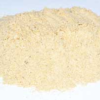

Before bottled ink there was gum arabic: the hardened tears of the acacia tree, ground and stirred into soot and water to make the black that filled manuscripts for centuries.
Origin & Traditional Use
Gum arabic is the dried sap of acacia trees of the Sahel, gathered as beads that form where the bark is cut. Since ancient Egypt it has bound pigments into paints and inks, and it is still used in watercolours, printing, sweets and soft drinks.
Uses by Tradition
Witchcraft & Folk Magick
- Homemade ink: dissolve a little in warm water, add a colour such as charcoal or crushed herbs, and write petitions and sigils with it.
- Incense binder: mix with water into a paste to hold powdered herbs and resins together as cones.
Ceremonial & Occult Magick
- Talismanic inks: the inks used for seals and talismans rely on gum arabic as the binder that makes them flow and hold.
- Fumigation: the gum itself is burned as a mild incense in consecration work.
Demonology & Black Magick
- Spirit seals: gum-bound inks are used to draw spirit seals, Goetic seals among them, on parchment or paper before evocation.
A Simple Working
- Dissolve half a teaspoon of gum arabic powder in two tablespoons of warm water.
- Stir in a pinch of activated charcoal until the liquid turns black.
- Pour it into a small lidded jar.
- Light a white chime candle, hold the jar above the flame and state what the ink is for.
- Write your petition or sigil with a dip pen or brush.
- Let it dry fully before folding or burning the paper.
Pairs Well With
- Activated charcoal, for a deep black ink.
- Dragon’s blood resin, for red ink and incense.
- Frankincense, for consecration incense cones.
- A dip pen, for writing seals and petitions.
Lore & History
The name comes from the Arabian ports through which the gum was traded to Europe. The acacia itself carries weight in Freemasonry, where a sprig of acacia stands for the immortality of the soul.
What You Receive
Gum arabic powder, available in 1 oz and 2 oz.
Did You Know?
Gum arabic is the food additive E414, used to stop sugar crystallising in sweets and to keep flavourings suspended in soft drinks.
| Weight | N/A |
|---|---|
| Size | 1 oz, 2 oz |
Related products


