


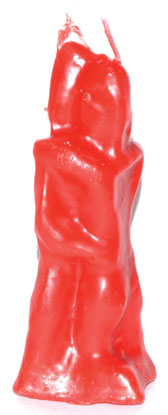

Two wicks in one candle let a couple burn side by side, each flame standing for one partner, until the wax between them melts together.
Origin & Traditional Use
The lovers candle is a modern candle-shop design, moulded as two embracing figures with separate wicks. In rootwork and folk magick it is used for passion, closeness and reconciliation. Red is the colour of desire and heat.
Uses by Tradition
Hoodoo & Rootwork
- Passion: carve each person’s name into one figure, dress both with a lust or love oil, and light both wicks together.
- Return: burn it for a lover who has strayed, with their photograph or a lock of hair beneath.
- Reading: watch how the two flames burn; flames leaning toward each other are read as a good sign.
Witchcraft & Folk Magick
- Anniversary candle: light it together on an anniversary or to mark a new step in a relationship.
- Friday timing: burn on the day of Venus.
A Simple Working
- Carve one name on each figure.
- Dress the candle with a little rose or jasmine oil.
- Set it on a saucer with a few red rose petals.
- Light both wicks at the same moment.
- Say both names together and what you want between you.
- Let it burn for an hour, snuff both wicks together, and repeat until it is gone.
- Keep the combined wax in a red bag by the bed.
Pairs Well With
- Rose petals: for love and sweetness.
- Love-drawing oil: for dressing both figures.
- A red cloth: for an altar under the candle.
- A double-wick snuffer: or two snuffers to put out both flames together.
Lore & History
Love has always been a large share of candle and wax work. The earliest written love charms in the Greek Magical Papyri, the Coptic spells of Roman Egypt and the medieval European grimoires all deal with drawing a lover home, much as this candle is used today.
What You Receive
A 5 1/2″ red lovers candle showing two embracing figures, with dual wicks. May need levelling at the base to stand straight.
Did You Know?
One of the oldest known love poems, written in Sumerian on a clay tablet from Nippur around 2000 BCE, is a bride’s song to the king Shu-Sin and is kept at the Istanbul Archaeology Museums.
| Weight | 0.5 lbs |
|---|
Related products


