
Black Cat pillar candle
Price range: $16.45 through $35.15
A black cat pillar for luck · Available in 2 sizes
A black cat pillar candle burned for luck, protection and gambling work.
Quick Uses
- Gambling: burn it with a lucky oil before a night of cards or dice and carry a scrap of the wax.
- Uncrossing: burn it to break a jinx or run of bad luck, then wash the doorstep.
- Familiars: set it on the altar for a cat familiar, living or passed on.
- Protection: burn it by the door on dark moon nights to keep the home guarded.
How to Use It
Hoodoo & Rootwork
- Gambling: burn it with a lucky oil before a night of cards or dice, and carry a scrap of the wax.
- Crossing: carve an enemy’s name into the base and burn it to send bad luck their way.
- Uncrossing: burn it to break a jinx or run of bad luck, then wash the doorstep.
Witchcraft & Folk Magick
- Familiar: set it on the altar for a cat familiar, living or passed on.
- Protection: burn it by the door on dark moon nights to keep the home guarded.
A Simple Working
- Carve your name and a dollar sign into the base of the candle.
- Dress it with a little lucky oil from base to wick.
- Set it on a plate with a few whole cloves around it.
- Light it on a Thursday evening and ask the black cat for luck.
- Let it burn for an hour, then snuff it out.
- Repeat on the next two nights.
- Carry three of the cloves in your pocket for luck.
Pairs Well With
- Whole cloves: for luck and money work.
- Lucky oil: for dressing the pillar.
- A lodestone: to draw luck alongside it.
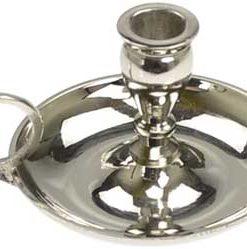
- A candle plate: to catch the drips from a long burn.
What You Receive
A black cat pillar candle in two styles: the standard 7″ x 1 1/2″ pillar, scented with essential oil blends and made with cotton and paper wicks; or a larger 3″ x 6″ soy wax pillar scented with clove essential oil, with a cotton wick.
Origin & Lore
Black cat candles take their meaning from the black cat’s mixed reputation in Europe and America: lucky in British and some Scottish and Japanese lore, unlucky in American popular belief. In hoodoo, the black cat stands for gambler’s luck, for protection from evil, and for crossing an enemy. A pillar burns long enough for several nights of work.
A strange black cat on the doorstep was a sign of coming prosperity in parts of Scotland; in much of America the same cat crossing your path is an omen to turn back.
The black cat’s bad name in Europe owes much to the 1233 papal bull Vox in Rama of Pope Gregory IX, which described heretics worshipping a black cat. In Britain, though, the black cat became lucky: sailors’ wives kept them to bring their husbands safely home, and a black cat on a wedding day is still treated as a good sign.
Did You Know?
Courtiers of the Han dynasty in China are recorded as holding cloves in their mouths to sweeten their breath before speaking to the emperor.
| Weight | N/A |
|---|---|
| Option | Standard, 3" x 6" |
Related products