


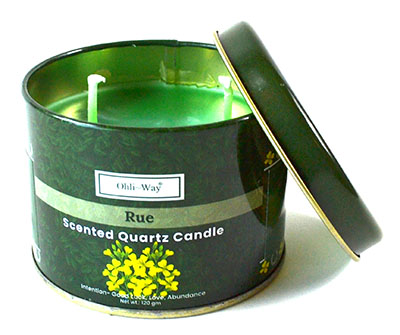
Ruda (Rue) tin candle
$10.95
The rue candle of the limpia
A rue-scented tin candle with crystal chips, burned for protection and clearing the evil eye.
Quick Uses
- Limpia: light the candle, sweep fresh rue over the body from head to feet and throw the bundle away outside.
- Doorway: burn the tin near the front door for an hour on the first of the month, asking that envy stay outside.
- Evil eye: burn beside a glass of water holding a sprig of rue, then pour the water out the door.
- Novenas: burn during a novena to Saint Michael with a sprig of rue on the altar cloth.
How to Use It
Witchcraft & Folk Magick
- Limpia: light the candle, sweep a bundle of fresh rue over the body from head to feet and throw the bundle away outside.
- Doorway guard: set the tin near the front door on the first of the month and burn it for an hour while asking that envy stay outside.
- Evil eye: burn beside a glass of water with a sprig of rue in it, then pour the water out the door at the end of the night.
Folk Catholicism & Spiritism
- Burned with a Credo or the Magnificat before a saint’s image in homes where a household member has been unwell in spirit or unlucky.
- Burned during a novena to a protective saint such as Saint Michael, with a sprig of rue laid on the altar cloth.
A Simple Working
- Place a pot of rue or a few dried rue sprigs beside the tin.
- Light the candle at dusk.
- Pass a sprig of rue around your head three times, saying that envy and the evil eye leave you.
- Touch the sprig to your chest, hands and feet.
- Burn the candle for an hour and snuff it with the lid.
- Leave the used sprig at your front door overnight and throw it out in the morning.
Pairs Well With
- Rue herb: fresh or dried, for sweeping and for the door.
- Fresh eggs: for the egg limpia that often follows.
- Holy water: to sprinkle around the room afterwards.
- A cimaruta charm: the Italian rue-sprig amulet against the evil eye.
What You Receive
One rue-scented candle with crystal chips, poured in a tin with a lid, 120 g.
Origin & Lore
Rue, Ruta graveolens, is a strong-smelling Mediterranean shrub carried by the Spanish to the Americas, where ruda became central to curanderismo and everyday folk protection. Its traditional role is cleansing and guarding: bundles are swept over the body in limpias, and a pot of rue by the door is kept to turn away envy and the evil eye.
Walk into almost any botánica and you can smell rue before you see it: sharp, bitter and green, the scent of a plant trusted for centuries to drive off envy.
Rue was called herb of grace in England, and Shakespeare’s Ophelia hands it out saying we may call it herb of grace on Sundays. In Naples the cimaruta, a silver charm shaped like a branching sprig of rue hung with tiny symbols, was worn against the evil eye. The 17th-century herbalist Nicholas Culpeper placed rue under the Sun and the sign of Leo.
Did You Know?
Rue, rūta in Lithuanian, is often called the national plant of Lithuania, where it was traditionally worn by brides as a sign of maidenhood.
| Weight | 0.4 lbs |
|---|
Related products


