


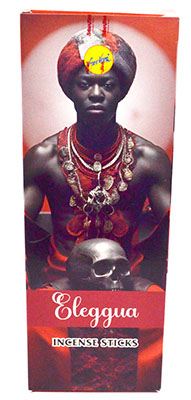
Elegua incense sticks
$9.85
Smoke for the keeper of the crossroads
Stick incense for Elegua, the Orisha who owns the crossroads, burned at his shrine for open paths, luck and protection.
Quick Uses
- Monday offering: light a stick before his image behind the door on Monday and greet him first.
- Opening roads: burn it with candies, toasted corn or a cigar when asking him to open a road to work or money.
- Threes: burn three sticks, knock three times and repeat your request three times.
- Crossroads: light a stick at a four-way crossing, leave a few coins and walk home without looking back.
How to Use It
Santería & Lucumí
- Monday offering: Monday is his day, so light a stick before his image behind the door and greet him before anyone else in the house.
- Opening roads: burn it with his favourite sweets: candies, toasted corn, a cigar or a little rum, when asking him to open a road to work or money.
- Threes: he is often counted in threes, so practitioners burn three sticks, knock three times and repeat requests three times.
Folk Catholicism & Spiritism
- Holy Child of Atocha: devotees who keep Elegua through his saint burn the incense before an image of the Santo Niño with a red candle for travel, prisoners and protection on the road.
- Crossroads work: light a stick at a four-way crossing, leave a few coins and ask for the way ahead to clear, then walk home without looking back.
A Simple Working
- On a Monday, place a red and a black candle side by side near your front door.
- Set out three pieces of hard candy on a small plate.
- Light both candles and then one stick of Elegua incense.
- Knock three times on the floor and greet him: “Elegua, open my roads.”
- Name the door you want opened, simply and specifically.
- Let everything burn down and leave the candy for three days before taking it to a crossroads.
Pairs Well With
- Red and black candle: in his two colours.
- Elegua statue: a focus for his shrine.
- Abre camino herb: the road-opener plant of Cuban tradition.
- Cigars: a classic offering to him.
What You Receive
Elegua stick incense, a box of 6 hexagon packs with 20 sticks in each (120 sticks).
Origin & Lore
Elegua (Eleggua, Elegbara) is the Yoruba Orisha of the crossroads, the messenger who carries offerings between people and the other Orishas. In Cuban Santería he is kept behind the front door as a small stone or cement head with cowrie-shell eyes, and his colours are red and black. He is syncretised with the Holy Child of Atocha and with Saint Anthony of Padua.
Nothing begins without Elegua. He is saluted first in every ceremony, fed first at every feast, and if he is ignored, the doors stay shut.
A well-known Yoruba story tells of two friends who farmed on either side of a road. The trickster walked between them wearing a hat painted red on one side and black on the other, and when they argued afterward about its colour, each certain of what he had seen, their friendship broke apart. The tale is told to show that he sees from every side, and that what we see depends on where we stand.
Did You Know?
In Lucumí practice Elegua is received as one of the Warriors, alongside Ogún, Ochosi and Osun, often before a person goes further in the religion.
| Weight | 0.8 lbs |
|---|
Related products


