



Almond oil
Price range: $6.55 through $63.75
Almond for wisdom and prosperity · Available in 3 sizes
An almond scented oil for anointing and spellcraft, worked for prosperity, wisdom, renewal and calm self-care rituals.
Quick Uses
- Study: anoint your brow before study or meditation, drawing on almond’s old association with wisdom.
- Prosperity: dress a green candle on the new moon to welcome fresh prosperity.
- Baths: add a few drops to a ritual bath for renewal after a hard season.
- Mojo bags: anoint coins or bills you keep in a money mojo bag.
How to Use It
Witchcraft & Folk Magick
- Anoint your brow before study or meditation, drawing on almond’s old association with wisdom.
- Dress a green candle on the new moon to welcome fresh prosperity.
- Add a few drops to a ritual bath for renewal after a hard season.
Hoodoo & Rootwork
- Dress a green or gold candle on a money petition, working the oil toward you.
- Anoint coins or bills you keep in a money mojo bag.
Ceremonial & Occult Magick
- Consecrate a wand or other tool of Air and Mercury with a drop of the oil.
- Anoint a Mercury talisman for learning and clear thought in a Mercury hour.
A Simple Working
- On a Wednesday, set a yellow or green chime candle on a small plate.
- Anoint the candle with almond oil from base to wick.
- Place a few whole almonds around it.
- Light the candle and name a skill you want to learn or a decision that needs wisdom.
- Touch a drop of oil to your brow and sit quietly until the answer settles.
- Keep the almonds in your study space or bury them in the garden afterward.
Pairs Well With
- Whole almonds, for placing on the altar or carrying.
- A yellow candle, for intellect and communication.
- Hazelnut, another nut of wisdom in European lore.
- Citrine, for prosperity and clear thinking.
- Bay leaves, for writing wishes and petitions.
What You Receive
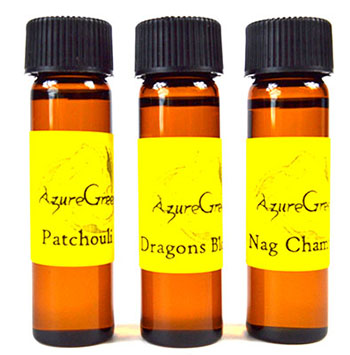
Almond oil, available in 2 dram, 1 oz and 16 oz bottles.
Origin & Lore
This is a single-note oil named for the almond, Prunus dulcis, a tree native to western Asia and cultivated around the Mediterranean since antiquity. Because it flowers so early it became a symbol of watchfulness, renewal and hope, and in magickal herbals it is listed under Mercury and Air for money, prosperity and wisdom.
The almond is the first tree to blossom at the end of winter, flowering on bare branches while frost is still on the ground.
In the Book of Numbers, Aaron’s rod is the only one of the twelve tribal staffs that sprouts, and it brings forth buds, blossoms and ripe almonds overnight as a sign of divine choosing. The seven-branched menorah of the Tabernacle was made with cups shaped like almond blossoms.
Greek myth tells of Phyllis, who died of grief waiting for her lover and was turned into an almond tree that burst into flower when he finally returned.
Did You Know?
In Hebrew the almond is shaqed, from a root meaning “to watch” or “to wake”, and the prophet Jeremiah makes a pun on it: he sees an almond branch, and God says he is watching over his word.
| Weight | N/A |
|---|---|
| Size | 2 dram, 1 oz, 16 oz |
Related products


