

Basil oil (Espiritu blend)
Price range: $3.25 through $80.25
Basil for wealth and sweet love · Available in 3 sizes
A blended basil oil for rituals and spellwork, used to draw wealth and abundance and in hoodoo for business and keeping love sweet.
Quick Uses
- Candle dressing: anoint a green candle for wealth and abundance on a Thursday.
- Floor wash: add to a floor wash and scrub the shop floor toward the inside to draw customers.
- Money: anoint money before spending it so it returns to you.
- Mojo bags: dress a mojo bag with basil, cinnamon and a lodestone for prosperity.
How to Use It
Witchcraft & Folk Magick
- Anoint a green candle for wealth and abundance on a Thursday.
- Dress coins and keep them in a basil-scented purse for money.
Hoodoo & Rootwork
- Add to a floor wash and scrub the shop floor toward the inside to draw customers.
- Anoint money before spending it so it returns to you.
- Dress a mojo bag with basil, cinnamon and a lodestone for prosperity.
Ceremonial & Occult Magick
- Anoint a Jupiter or Mars talisman for prosperity and strength.
- Dress candles for a money ritual timed to the waxing moon.
A Simple Working
- Put a few drops of basil oil into a bowl of warm water.
- Wash your hands in it, thinking of the money you want to draw.
- Dress a green chime candle from base to wick with the oil.
- Anoint a coin or a bill and place it under the candle.
- Light it and speak your money goal aloud.
- Keep the coin in your wallet and spend the bill only when you need to, so it carries luck back.
Pairs Well With
- Dried basil, for floor washes and mojos.
- Cinnamon, for quick money.
- A lodestone, for drawing wealth.
- A green candle, for money.
- Pyrite, for business success.
What You Receive
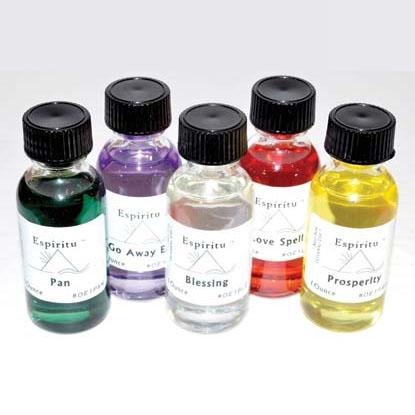
Basil oil, Espiritu blend, available in 2 dram, 1 oz and 16 oz bottles.
Origin & Lore
This oil blend is named for sweet basil, Ocimum basilicum, a herb native to India and grown across the Mediterranean for thousands of years. In folk magick and hoodoo basil is one of the great money herbs, used to draw customers and wealth, and it is also linked with love and protection; magickal herbals place it under Mars and Fire.
In Italy, a pot of basil on the windowsill was once a signal that a woman was ready to receive a suitor.
In hoodoo, basil water was scrubbed across shop floors and sprinkled in doorways to draw customers, and old accounts tell of women of the night using it to bring trade. In Italian folklore basil was a token of love, and Boccaccio’s Decameron tells of Lisabetta, who hid her murdered lover’s head in a pot of basil and watered it with her tears.
Did You Know?
The name basil comes from the Greek basilikon, “royal”, and in France it is still sometimes called herbe royale.
| Weight | N/A |
|---|---|
| Size | 2 dram, 1 oz, 16 oz |
Related products