


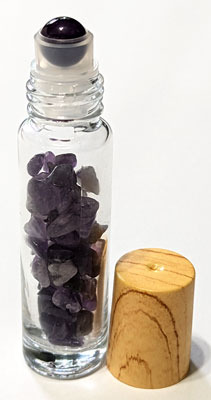
Amethyst in roller bottle
$7.65
An amethyst roller for psychic work
A 10 ml roller bottle with an amethyst ball for your own oil blends, amethyst being tied to a clear head, calm and psychic work.
Quick Uses
- Dreams: fill it with a carrier oil and a few drops of mugwort or lavender oil to roll on before sleep.
- Divination: roll your blend onto your brow before tarot or scrying.
- Calm: keep a calming blend in it for difficult days.
- Wisdom: roll a blend onto a purple candle on a Thursday for wisdom and spiritual growth.
How to Use It
Witchcraft & Folk Magick
- Fill it with a carrier oil and a few drops of mugwort or lavender oil for a dream blend to roll on before sleep.
- Roll your blend onto your brow before tarot or scrying.
- Keep a calming blend in it for difficult days.
Ceremonial & Occult Magick
- Roll a blend onto a purple candle on a Thursday, the day of Jupiter, for wisdom and spiritual growth.
A Simple Working
- Choose a carrier oil such as sweet almond, jojoba or fractionated coconut, and a few drops of a condition or essential oil suited to psychic work, dreams or calm.
- Hold the roller bottle in both hands for a moment and state what the blend is for.
- Fill the bottle most of the way with the carrier, add your chosen drops, and press the amethyst roller ball firmly into place.
- Light a purple chime candle and roll a line of the blend down the candle from wick to base.
- Roll the blend onto your wrists or the back of your neck, naming your intention aloud.
- Let the candle burn down, and label the bottle with its purpose and the date.
Pairs Well With
- Mugwort, the classic herb of dreams.
- Lavender, for calm.
- Purple candles.
- Jojoba oil, a stable carrier for roller blends.
- A tarot deck or pendulum.
What You Receive
Amethyst in roller bottle: a 10 ml roller bottle fitted with a matched, smooth-rolling amethyst ball, made for storing and applying your own oil blends.
Origin & Lore
This is a glass roller bottle fitted with a smooth amethyst rolling ball, made for storing your own essential oil or condition oil blends and rolling them onto skin, candles or tools. Amethyst, purple quartz, has been linked since antiquity with sobriety and a clear mind, and in modern practice with psychic work, dreams and calm.
The ancient Greeks believed amethyst kept the wearer sober, and drank from cups carved of it.
Amethyst was set in rings, cups and amulets by the Greeks and Romans to guard against drunkenness, and medieval bishops wore it in their rings as a stone of piety and clear judgement. In modern crystal lore it is one of the stones most associated with intuition and the third eye.
Did You Know?
The name amethyst comes from the Greek amethystos, not drunken.
| Weight | 0.1 lbs |
|---|
Related products


