

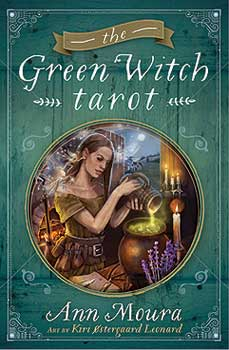
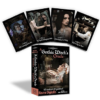
Green Witch Tarot (Deck & Book) by Ann Moura
$35.19
Tarot Of The Old Religion
A 78-card tarot rooted in green witchcraft, plants, animals and the old religion, used by witches who read with the land rather than against it.
Quick Uses
- Seasonal Readings: Read at each sabbat to see what the turning wheel asks of you.
- Plant Spirit Contact: Draw a card before working with a herb and ask what the plant wants in return.
- Elemental Balance: Lay one card per element to check which force is weak in your life.
- Study: Work through the long guidebook to learn its witchcraft-based meanings.
How to Use It
Witchcraft & Folk Magick
- Read at each of the eight sabbats and keep the card on the altar until the next.
- Draw a card to choose which herb to work with for a given spell.
Ceremonial & Occult Magick
- Assign each suit to its element and use the aces to call the quarters.
- Use a trump as a doorway for meditation with the spirits of nature.
Demonology & Black Magick
- Ask the spirit of a baneful plant, such as datura or nightshade, to speak through a card before you work with it.
- Read before and after making an offering at a wild place to see how it was received.
- Lay a chosen card under a black candle as the focal image of a binding or banishing working.
A Simple Working
- Go outside, or stand by an open window, with the deck and a small bowl of earth.
- Light a green chime candle and set a sprig of rosemary beside it.
- Shuffle and draw one card for each element: earth, air, fire and water.
- Lay them in a cross with the bowl of earth at the centre.
- Read which element is strongest and which is lacking, and decide one act to restore balance.
- Return the earth and rosemary to the ground as thanks.
Pairs Well With
- Rosemary: a garden herb long used for remembrance and cleansing.
- Green chime candles: for nature and healing readings.
- Moss agate: a stone associated with gardens and growth.
- Offering bowl: for leaving thanks to the land spirits after a reading.
What You Receive
One tarot deck of 78 cards illustrated by Kiri Østergaard Leonard, with a 264-page guidebook.
Origin & Lore
Tarot began as an Italian game in the 1400s and became a divinatory tool in France in the late 1700s. Twentieth-century witches adopted it widely, and many decks now recast its 78 cards through the seasons, herbs and spirits of the witch’s year.
Ann Moura’s deck follows that green witchcraft path, with Kiri Østergaard Leonard’s art showing witchcraft practices and encounters with plants and animals, aimed at opening a line between reader and the spirits of nature.
Did You Know?
England’s Witchcraft Act of 1735 stayed on the books until 1951, when it was replaced by the Fraudulent Mediums Act; its repeal is often cited as the moment modern public witchcraft could emerge.
| Weight | 1.2 lbs |
|---|
Related products