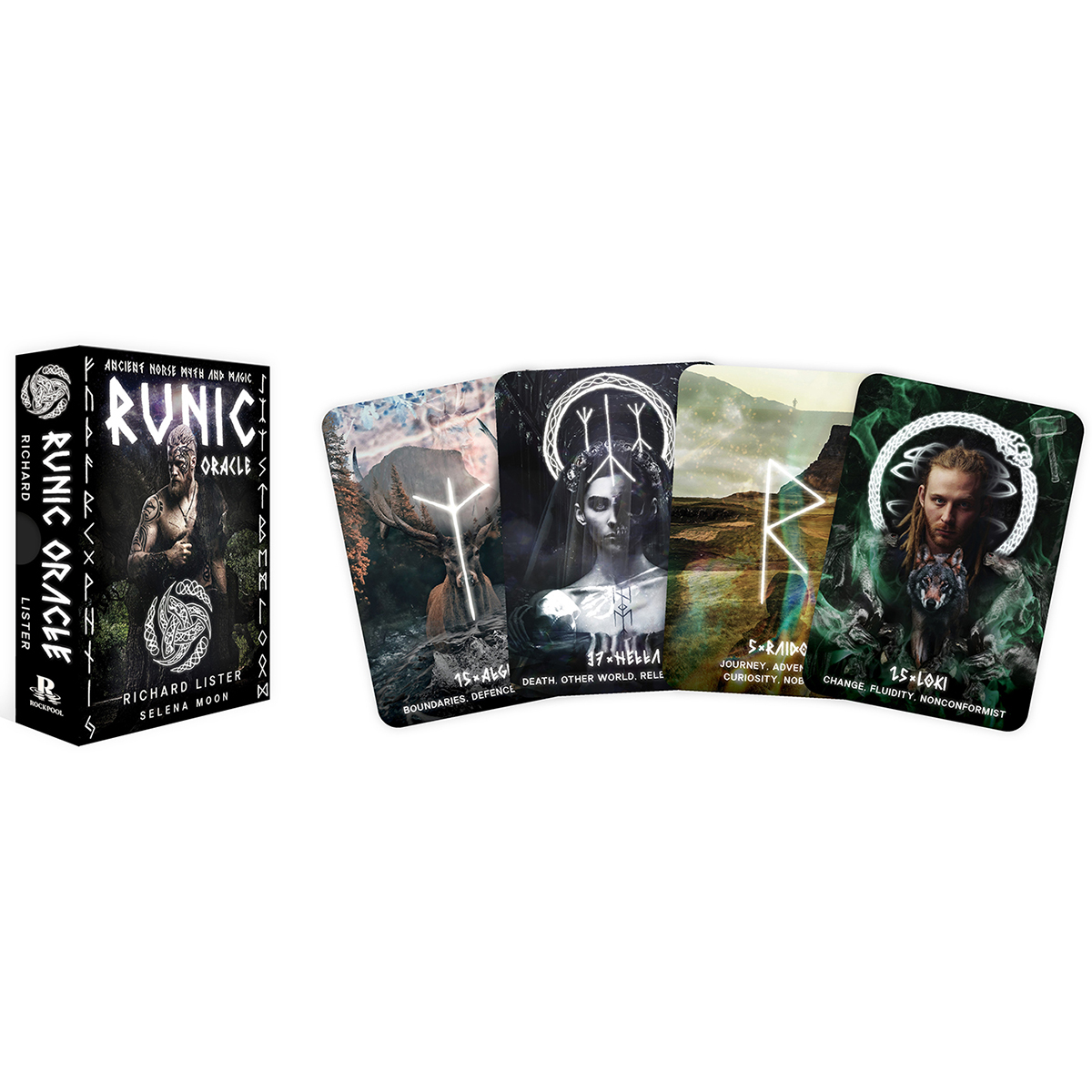
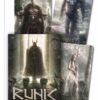
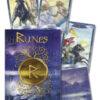
Runic Oracle by Lister & Moon
$29.65
Rune Lore for the Reading Table
A 44-card oracle with a velvet finish built on the Elder Futhark, the Norse gods and Viking ancestral myth, reached for by practitioners who want the runes and the wyrd in card form.
Quick Uses
- Daily draw: Pull one card at dawn and read it as the thread the Norns are spinning for that day.
- Ancestor work: Lay a card on your ancestor shelf and ask your forebears to speak through its rune.
- Rune study: Work through the deck one card a night to learn each stave of the Elder Futhark.
- Before a working: Draw three cards to read the past, present and becoming of the matter you mean to work on.
How to Use It
Witchcraft & Folk Magick
- Read a three-card spread for Urd, Verdandi and Skuld before any spell, so you know what has been, what is and what is becoming.
- Carry the card of the rune you need (Fehu for wealth, Algiz for protection) in a pocket or under a candle for the length of a working.
Ceremonial & Occult Magick
- Use the cards as meditation keys: gaze on one rune image, chant its name, and note what rises.
- Bind two or three rune cards together on the altar as a bindrune focus for a talisman you are charging.
Demonology & Black Magick
- Read before and after any evocation or spirit contract to see how the spirit is disposed and how the work has landed.
- Ask a spirit you already work with to answer through the deck, drawing one card per question inside the circle.
- Draw to divine which of the old powers, or which spirit, is right to approach for a given need.
A Simple Working
- Clear the table and light a beeswax candle in a holder.
- Burn a pinch of mugwort and pass the deck through the smoke.
- Name the question aloud and give it to the Norns.
- Shuffle until the deck feels settled in your hands, then draw three cards in a row.
- Read the first as what has been laid down, the second as what is, the third as what is becoming.
- Write the runes and your reading in your journal.
- Leave a little mead or water on the altar as thanks.
Pairs Well With
- A set of carved runes: cast the staves to confirm what the cards show.
- Mugwort: the classic seer’s herb for clearing a deck and opening the sight.
- A reading cloth: gives the cards a clean, dedicated surface.
- A blank grimoire: for keeping a record of rune draws and their outcomes.
What You Receive
One oracle deck of 44 cards with a velvet finish, themed on the runes of the Elder Futhark, the Nordic pantheon and Viking ancestral myth.
Origin & Lore
Oracle decks descend from the fortune-telling cards that spread through Europe from the late eighteenth century: packs with their own fixed images and meanings, free of the 78-card tarot structure, made to be read directly for omens and counsel. This deck brings that format to the runes, which were first a writing system and later a tool for casting lots.
The cards draw on Scandinavian and Northern European lore, the gods of the Norse pantheon and the idea of the wyrd, the web of fate the Norns were said to weave at the roots of Yggdrasil. The vǫlva, the travelling seeress of the sagas, was the figure people turned to when they wanted to know that fate.
Did You Know?
The Elder Futhark has 24 runes, traditionally divided into three groups of eight called ættir, each named after the first rune in its row.
| Weight | 1 lbs |
|---|
Related products

Crystal Balls