

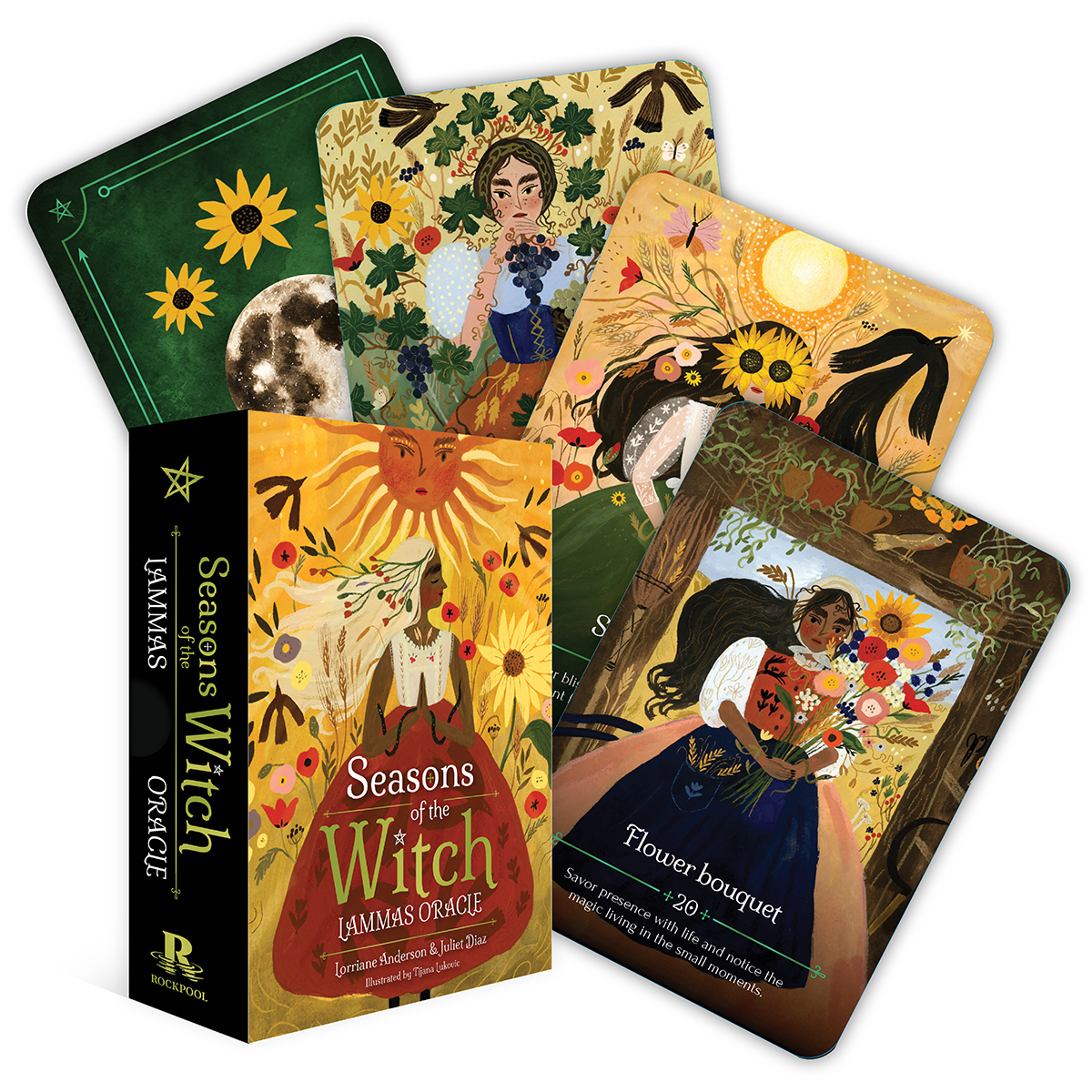
Seasons of the Witch: Lammas Oracle by Anderson & Diaz
$27.45
Oracle of the First Harvest
The seventh deck in the Seasons of the Witch series, a 44-card oracle and guidebook built on Lammas, the season of harvest, success and gratitude, reached for in readings on ambition and reward.
Quick Uses
- Harvest reading: Draw a card at Lammas to see what you have reaped this year.
- Career draw: Pull a card before a job interview, launch or negotiation.
- Gratitude rite: Lay a card beside a loaf or a sheaf of grain as an offering of thanks.
- Courage: Read a card’s invocation aloud when you need the nerve to chase a goal.
How to Use It
Witchcraft & Folk Magick
- Read at Lammas and through the late summer for questions of work, success and abundance.
- Place a drawn card under a gold or yellow candle as the focus of a success spell.
Hoodoo & Rootwork
- Set the card in a money or road-opening spell as the image of the result you want.
- Draw before dressing a candle to see whether the work needs opening, drawing or protection.
Demonology & Black Magick
- Read before approaching a spirit of wealth or success, and again after the pact or offering.
- Use the drawn card as the focal image on a petition laid before a spirit’s sigil.
A Simple Working
- Bake or buy a small loaf and set it on the altar.
- Light a yellow candle beside it.
- Name what you have achieved this year and what you still mean to reach.
- Shuffle and draw one card for the harvest and one for the next sowing.
- Read both, then speak the guidebook invocation for the second card.
- Break the loaf, eat a piece and leave the rest outside as an offering.
Pairs Well With
- A yellow or gold chime candle: the colour of grain and success.
- Wheat or barley stalks: traditional Lammas decorations for the altar.
- A road-opener oil: to dress a candle when a card calls for new paths.
- The other Seasons of the Witch decks: to read through the whole Wheel.
What You Receive
One oracle set: a deck of 44 cards and a guidebook with card meanings, invocations and practices for working with the energy of Lammas.
Origin & Lore
Oracle decks descend from the fortune-telling cards that spread through Europe from the late eighteenth century: packs with their own fixed images and meanings, free of the 78-card tarot structure, made to be read directly for omens and counsel.
This is the seventh deck in the Seasons of the Witch series, centred on Lammas at the start of August, the first harvest festival. The deck frames it as a season of success and gratitude, the energy of the confident witch who chases her desires.
Did You Know?
The name Lammas comes from the Old English hlafmæsse, “loaf-mass”: bread baked from the first ripe grain was brought to church to be blessed on 1 August.
| Weight | 0.9 lbs |
|---|
Related products