

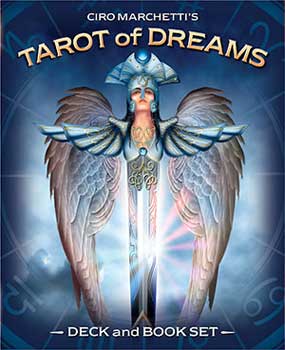
Tarot of Dreams by Ciro Marchetti
$32.95
Dream Imagery for Deep Readings
An 83-card tarot by Ciro Marchetti that blends dream imagery with traditional structure, reached for by readers who work with dreams, the Qabalah and the subconscious.
Quick Uses
- Dream key: Draw one card before sleep and set it under your pillow to seed the night’s dreams.
- Morning reading: Pull a card on waking to help interpret a dream that is still fresh.
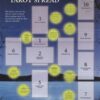
- Tree of Life spread: Use the extra Tree of Life card as the centre of a ten-card Sephirotic spread.
- Court clarity: Draw a Palace card beside a confusing court card to see the setting it acts in.
How to Use It
Witchcraft & Folk Magick
- Keep the deck by the bed with a dream journal and read on waking, before the details fade.
- Draw a card on the full moon and meditate on its image as the moon rises.
Ceremonial & Occult Magick
- Lay the Major Arcana on the paths of the Tree of Life and use the extra Tree of Life card as a map for pathworking.
- Pair the guidebook’s astrological and Qabalistic notes with your planetary hours when choosing a card to meditate on.
Demonology & Black Magick
- Ask a spirit to send an answer through dream, then draw a card on waking to confirm or clarify what was shown.
- Before an evocation, draw for the state of your own mind; afterward, read for what came through in the night.
- Keep one card from the deck as a dream-gate image for astral work under a spirit’s guidance.
A Simple Working
- Brew a cup of mugwort tea an hour before bed.
- Light a white candle and shuffle the deck while holding your question.
- Draw one card and study it for a few minutes, fixing its image in your mind.
- Place the card under your pillow and snuff the candle.
- On waking, write down every fragment of the dream before speaking to anyone.
- Draw a second card and read the two together alongside your notes.
- Return both cards to the deck at the next new moon.
Pairs Well With
- Mugwort, the classic dream herb, as tea or a sachet under the pillow.
- A moonstone, to keep with the deck on the nightstand.
- A blank journal, for dream records and card notes.
- A white or silver candle, for quiet readings before sleep.
What You Receive
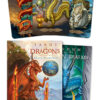
83 cards: the 78 traditional tarot cards plus a Tree of Life card and four Palace cards, with a 112-page guidebook by Lee Bursten. Art by Ciro Marchetti.
Origin & Lore
Tarot’s role as a divination tool began in late 18th-century France, and by the late 19th century occultists had tied the 22 Major Arcana to the 22 paths of the Qabalistic Tree of Life. This deck builds directly on that tradition with its added Tree of Life card.
Dream divination, or oneiromancy, is far older than tarot. Artemidorus of Daldis compiled the Oneirocritica, a five-book manual of dream interpretation, in the 2nd century AD.
Did You Know?
Etteilla published one of the first tarot decks designed specifically for fortune-telling, the Grand Etteilla, around 1789.
| Weight | 1.2 lbs |
|---|
Related products