


Moonstone Rune Set
$36.25
Runes Of Moon And Water
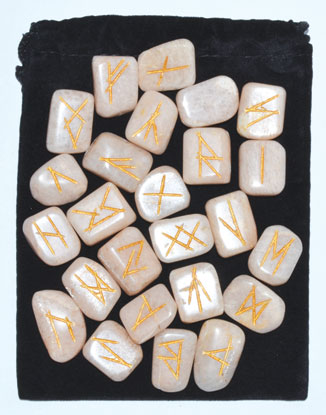
The 24 runes of the Elder Futhark plus a blank stone, carved in moonstone, for readers who cast by moonlight and want a stone tied to intuition and dreams.
Quick Uses
- Moon Casting: Cast at the full or new moon and read the runes by candle or moonlight.
- Dream Rune: Draw one rune before sleep, place it under your pillow, and note your dreams.
- Love Questions: Cast three runes over a relationship and read them together.
- Daily Draw: Pull a single rune each morning as a guide for the day.
How to Use It
Witchcraft & Folk Magick
- Draw a rune under the full moon and leave it on the windowsill overnight to charge.
- Slip Laguz under the pillow for dream sight.
Ceremonial & Occult Magick
- Cast in the hours of the Moon for questions of dreams, travel and the hidden.
- Use a moon rune as the key image for scrying or path-working.
Demonology & Black Magick
- Cast before and after an evocation to read the ground the working stands on and what it has stirred.
- Ask a called spirit to guide your hand into the bag, then read the runes it draws as its answer.
- Lay a single rune such as Thurisaz or Hagalaz on a seal or petition as the focal image of a hex or binding.
A Simple Working
- On the night of the full moon, set a bowl of water where the moonlight can reach it.
- Light a silver or white candle and burn a little mugwort.
- Hold the pouch over the water and ask your question.
- Draw three runes and lay them beside the bowl.
- Read them, then look into the water for any image that adds to the reading.
- Leave the runes beside the bowl until morning, then pour the water onto the earth.
Pairs Well With
- Mugwort: the dreamer’s herb, burned or drunk before a moon reading.
- Silver chime candles: for lunar workings.
- A dream journal: to record what a rune under the pillow brings.
- A rune cloth: a clean field for casting.
What You Receive
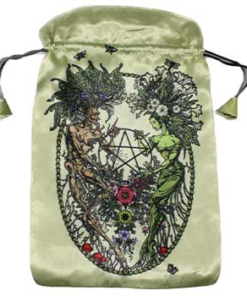
One set of moonstone rune stones: the 24 runes of the Elder Futhark plus one blank stone, in a pouch (pouch colour varies). Stones range from about 1/2″ to 1″; as natural stones, each piece varies in colour and sheen.
Origin & Lore
The runes were the written letters of the early Germanic peoples before they were a divination tool; the old practice of drawing marked lots to read fate is the root of modern rune-casting.
Moonstone has long been linked to the Moon in Western correspondence tables, and older writers believed its glow waxed and waned with the lunar phases.
Did You Know?
The blue-white glow that moves across moonstone is called adularescence, after Adularia, an old name for a feldspar from the Adula massif in the Swiss Alps.
| Weight | 0.6 lbs |
|---|
Related products


Altar Supplies

