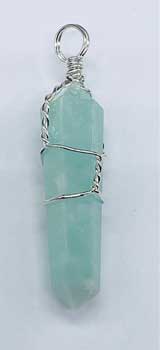
Amazonite Wire-Wrapped Point Pendants (Set of 5)
$19.75
Clear Speech and Open Intuition
Five wire-wrapped amazonite points, the soft blue-green feldspar practitioners wear for honest communication, releasing what is pent up, and sharpening psychic sense.
Quick Uses
- Speak Up: Wear one at the throat before a hard conversation.
- Divination: Hang one on a cord and use it as a pendulum for yes or no questions.
- Gift Set: Share the five among a circle or family as matching charms.
- Luck Charm: Slip one into a pocket when playing games of chance, as amazonite is called a gambler’s stone.
How to Use It
Witchcraft & Folk Magick
- Hang one on your altar during a full moon to open the mind before scrying.
- Wear one when you have something difficult to say, letting it rest at the throat.
Hoodoo & Rootwork
- Carry one in a green mojo bag with chamomile for luck at cards and dice.
- Place one by the phone when you are waiting for someone to call.
Ceremonial & Occult Magick
- Use the pendant as a pendulum over a letter board or chart in divination work.
- Wear one during pathworking or meditation to help put visions into words afterwards.
Demonology & Black Magick
- Use one as a pendulum to receive yes or no answers once a spirit has been called.
- Wear one as a charm for clear communication with the spirit you are working with.
A Simple Working
- Thread one pendant onto a length of cord about a hand’s length long.
- Light a white tealight and sit quietly in front of it.
- Hold the cord still and ask the pendulum to show you yes, then no.
- Ask one clear question at a time and note the swing.
- Write each answer down in a notebook.
- Thank whatever guides you work with and snuff the light.
- Keep the pendulum wrapped in a cloth between sessions.
Pairs Well With
- Lapis Lazuli: Shares amazonite’s link to truthful speech.
- Chamomile: A traditional gamblers’ herb for luck bags.
- Black Cord: For turning a pendant into a pendulum or necklace.
- Labradorite: Adds depth to psychic and divination work.
What You Receive
A set of five amazonite points, each wrapped in wire as a pendant, approximately 1 3/8″ long. Sizes will vary from piece to piece. No chain or cord is included.
Origin & Lore
Amazonite is a green to blue-green variety of microcline feldspar. It was carved into beads and amulets in ancient Egypt, and pieces have been found among grave goods. In modern crystal tradition it is worked for truthful communication, letting go of blocked feeling and opening the intuition.
Despite its name, it has never been found in the Amazon basin; the name seems to come from early confusion with another green stone from the region.
Did You Know?
Amazonite is named after the Amazon River, yet no deposits of it have ever been found there.
Related products