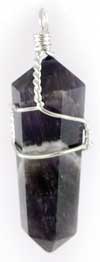
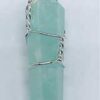
Amethyst Wire-Wrapped Point Pendants (Set of 5)
$16.45
Purple Stone of Inner Sight
Five wire-wrapped amethyst points, the purple quartz practitioners wear to quiet the mind and open the psychic and intuitive senses.
Quick Uses
- Dream Work: Hang one from the bedpost or tuck it beneath the pillow for vivid dreams.
- Psychic Focus: Wear one during tarot readings to stay receptive.
- Coven Charms: Bless all five together and give one to each member of a working group.
- Sober Mind: Wear one at gatherings to keep a clear head, in honour of the stone’s ancient lore.
How to Use It
Witchcraft & Folk Magick
- Lay one on a pillow with a sprig of mugwort for prophetic dreaming.
- Wear one during tarot or rune readings to stay open and clear.
Hoodoo & Rootwork
- Place one in a jar of spring water on the ancestor shelf to invite clear messages.
- Carry one in a purple bag with lavender to calm a busy household.
- Put one in a lavender sachet and hang it over the bed as a charm for gentle dreaming.
Ceremonial & Occult Magick
- Wear one during astral projection work as a personal anchor point.
- Set the five pendants at the points of a pentagram drawn on the altar for meditation and invocation.
Demonology & Black Magick
- Wear one for mental clarity while scrying for a spirit in a dark mirror.
- Lay one at the edge of the triangle as a protective token during evocation.
A Simple Working
- Before bed, light a purple or white chime candle on a heatproof dish.
- Place one amethyst pendant beside a small bundle of dried mugwort.
- Hold the pendant and ask aloud for clear and memorable dreams.
- Snuff the candle once you are ready to sleep.
- Hang the pendant from the bedpost or place it under the pillow.
- Keep a notebook by the bed and write any dreams down on waking.
Pairs Well With
- Mugwort: The classic dreaming herb for pillow work.
- Lavender: A soft, quieting scent for bedtime and meditation.
- Selenite: Keeps the amethyst cleared between uses.
- Tarot Cards: Wear amethyst while reading to stay receptive.
What You Receive
A set of five amethyst points, each wire wrapped as a pendant, approximately 1 3/8″ long. No chain or cord is included.
Origin & Lore
Amethyst is the purple variety of quartz. The ancient Greeks believed it protected the wearer from drunkenness, and wine cups were sometimes carved from it. Its long association with sobriety grew into a wider reputation for a clear, quiet mind.
In medieval Europe amethyst was set into bishops’ rings and treated as a stone of piety, and modern practitioners use it for meditation, dreams and psychic work.
Did You Know?
The name amethyst comes from the Greek amethystos, meaning not intoxicated.
Related products