



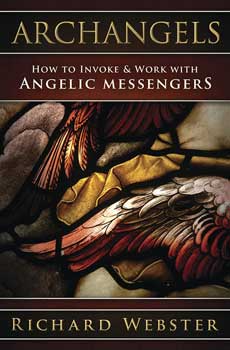

Archangels: Invoke & Work With Angelic Messengers by Richard Webster
$18.69
Call The Great Angels By Name
A paperback guide to Michael, Raphael, Gabriel, Uriel and many lesser-known angels, with meditations, rituals and correspondences for working with each.
Quick Uses
- Correspondence Table: Check an archangel’s crystal, oil and element before you build an altar to them.
- Invocation Guide: Read the invocation aloud when you call an angel for protection.
- Dream Request: Use its dream work before sleep to ask an angel for guidance.
How to Use It
Witchcraft & Folk Magick
- Dress a candle with the archangel’s oil from the book and set their crystal beside it.
- Keep a small angel shelf at home and greet the archangels at the four directions each morning.
Ceremonial & Occult Magick
- Call the four archangels at the quarters when you cast a circle, using the book’s correspondences.
- Use the hierarchy of angels to understand where each being sits before you invoke.
Demonology & Black Magick
- Call Michael at the edge of the circle before any work with fallen or chthonic spirits.
- Study angelic hierarchy alongside goetic material, since the grimoires use one to command the other.
A Simple Working
- Face east and light a white candle.
- Burn a little frankincense.
- Look up the archangel you need and set their crystal by the candle.
- Read the invocation from the book slowly.
- State your request plainly.
- Sit for a few minutes, give thanks and let the candle burn down.
Pairs Well With
- Frankincense: A traditional incense for angelic work.
- White Candles: For invocations.
- Clear Quartz: A general stone for angel altars.
- Michael Medallion: For protection work.
What You Receive
One copy of Archangels: Invoke & Work With Angelic Messengers by Richard Webster. 5.5″ x 8.25″ paperback, 280 pages.
Origin & Lore
This book introduces the four best-known archangels, Michael, Raphael, Gabriel and Uriel, along with many lesser-known angels. It explains the angelic hierarchy and each angel’s role, lists correspondences such as crystal, essential oil, element, zodiac sign and chakra, and gives meditations, rituals, affirmations, invocations and dream work for protection, guidance and wisdom.
The Christian hierarchy of nine angelic choirs comes from the writer known as Pseudo-Dionysius, around 500 CE. Uriel appears in 1 Enoch and 2 Esdras, and the Golden Dawn’s pentagram ritual calls Raphael, Gabriel, Michael and Uriel at the four quarters.
Did You Know?
Michael and Gabriel are the only angels named in the Protestant Bible; Raphael appears in the Book of Tobit, which is in the Catholic canon.
Related products


