

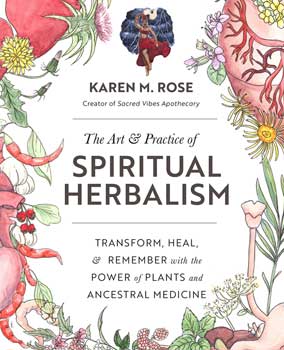


Art & Practice of Spiritual Herbalism by Karen M Rose
$29.69
Plants For Body And Spirit
A paperback guide to traditional folk herbalism that ties each body system to its spiritual correspondences, plants and rituals.
Quick Uses
- Correspondence Lookup: Check the spiritual links for a body system before choosing herbs for a ritual.
- Ancestral Recipes: Try one of its ancestral recipes and note how it feels in your practice.
- Ritual Planner: Pair a plant from the book with a candle and prayer for spiritual balance.
How to Use It
Witchcraft & Folk Magick
- Build a herb altar around one body system’s correspondences and sit with it for a week.
- Keep a herbal journal of how each plant feels in ritual, beside the book’s notes.
Hoodoo & Rootwork
- Use its plant material to plan spiritual baths and washes for cleansing.
- Make ancestor offerings of the plants and recipes your own family used.
Demonology & Black Magick
- Study how plants are tied to the body before choosing herbs for a doll or poppet.
- Use plant correspondences to dress offerings for a spirit linked to that part of the self.
A Simple Working
- Choose one body system from the book that you want to bring into balance.
- Read its spiritual correspondences.
- Brew a cup of a gentle herb it names, such as chamomile.
- Light a white candle and hold the warm cup.
- Say a prayer for balance in that part of your life.
- Write what came up in your herbal journal.
Pairs Well With
- Chamomile: A gentle, common herb for calm.
- White Candles: For quiet spiritual work.
- Mortar and Pestle: For grinding herbs.
- Herbal Journal: To record results.
What You Receive
One copy of Art & Practice of Spiritual Herbalism by Karen M Rose. 7.5″ x 9.25″ paperback, 208 pages.
Origin & Lore
This is a book of traditional folk herbalism organised by body system, such as circulatory, digestive and reproductive. Each section gives a short overview of the system, its spiritual correspondences, and the plants and rituals associated with it, with stories, ancestral recipes and simple practices throughout.
Herbalists have long linked plants to body and spirit together. The doctrine of signatures, set out by Paracelsus and later by Jakob Böhme in his 1621 work Signatura Rerum, held that a plant’s form revealed its purpose.
Did You Know?
Lungwort earned its name from the doctrine of signatures, because its white-spotted leaves were thought to resemble lungs.
Related products