



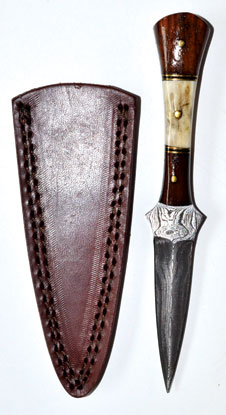
Baby Stag Damascus Athame (7″)
$57.15
Heavy Patterned Steel
A solid athame with a wood-grain Damascus blade and a wood handle set with bone, for practitioners who want a weighty tool for serious ritual work.
Quick Uses
- Circle Casting: Cast your circle with this heavy blade for a strong, clear boundary.
- Success Rites: Charge a career candle by touching the blade to it.
- Oath Blade: Swear oaths and dedications on the blade.
- Altar Guardian: Lay it across the front of your altar to guard the space.
How to Use It
Witchcraft & Folk Magick
- Swear your dedication or initiation oaths with your hand laid flat on the blade.
- Lay it across the threshold of your ritual room to guard it while you work.
Hoodoo & Rootwork
- Carve your goals and your name into a green or orange candle for road-opening and success.
- Draw the blade across the doorway to cut away blockages on your road.
Ceremonial & Occult Magick
- Use it as the tool of fire in elemental rites, pointing it to the south.
- Touch it to a Jupiter talisman to charge it for advancement.
Demonology & Black Magick
- Hold it during evocation as a sign of command and point it at the triangle when giving the spirit its charge.
- Use it to cut and seal a pact paper once a spirit has agreed to your terms.
A Simple Working
- On a Thursday, light an orange chime candle for success and opportunity.
- Write your goal on a slip of paper and lay it under the candle holder.
- Hold the athame point up over the flame and speak your goal.
- Lower the point to touch the paper three times.
- Let the candle burn down.
- Fold the paper toward you and keep it in your wallet until the goal is met.
Pairs Well With
- Orange Chime Candles: For success and new opportunities.
- Cinnamon: A warm herb for drawing success.
- Pyrite: A stone of ambition to keep on the altar with the blade.
- Black Altar Cloth: For wrapping a fine blade between rites.
What You Receive
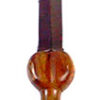
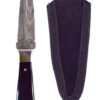
One 7″ Damascus athame with a heavy, solid build, a wood handle with bone set in the centre and a wood-grain pattern on the forged steel blade. Sheath included.
Origin & Lore
This athame, like all athames, was made for casting circles and commanding spirits. The patterned steel reflects the old belief that a well-forged blade carried power of its own.
Pattern-welded steel, made by folding and forging layers of metal together, was used for prized swords in early medieval Europe, including many Viking and Anglo-Saxon blades. The swirling patterns gave such swords their reputation as magickal weapons, and some were given names in sagas and poems.
Did You Know?
Early medieval smiths forged pattern-welded swords whose swirling blades inspired legends of named, magickal weapons.
Related products


