




In Greek Orthodox churches a sprig of basil is still dipped in holy water to bless the faithful. In rootwork, basil water mops a shop floor to bring in trade.
Origin & Traditional Use
Ocimum basilicum is a fragrant annual native to tropical Asia and grown for thousands of years across India and the Mediterranean. It has always been first a kitchen herb, and was traditionally used in folk remedies.
Uses by Tradition
Witchcraft & Folk Magick
- Love sachet: carry dried basil with rose petals to draw affection.
- Household peace: keep a bowl in the kitchen or scatter a little in the corners of a quarrelsome home.
- Money purse: keep a pinch in your wallet so money stays and grows.
Hoodoo & Rootwork
- Business floor wash: steep basil, strain it into the mop water and wash the shop from the front door inward to draw customers.
- Money bath: add basil tea to bathwater for money drawing and to wash off bad luck with finances.
A Simple Working
- Steep two tablespoons of basil in a litre of just-boiled water for fifteen minutes.
- Strain the liquid into a bucket of warm water.
- Add a pinch of cinnamon.
- Light a green chime candle near the entrance.
- Wash the floor from the front door inward, saying aloud what you want to come through it.
- Pour what is left onto the front step.
Pairs Well With
- Cinnamon, for speed in money work.
- Alfalfa, to keep the household provided for.
- Rose petals, in love sachets.
- A green chime candle, for business drawing.
Lore & History
An Orthodox legend says basil was found growing where the True Cross was discovered, and it is still used to bless water on the feast of the Exaltation of the Cross. In the Decameron, a grieving woman hides her murdered lover’s head in a pot of basil, a tale later retold in a famous English poem.
What You Receive
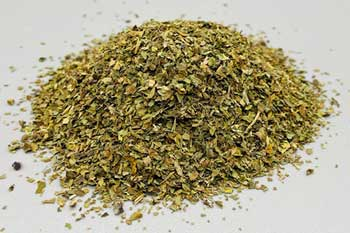
Cut dried basil leaf, available in 1 oz, 2 oz and 1 lb.
Did You Know?
The name basil comes from the Greek basilikon, meaning “royal”.
| Weight | N/A |
|---|---|
| Size | 1 oz, 2 oz, 1 lb |
Related products


