


Grimoires asked for new, unused virgin wax for their images and candles: wax that had never served another purpose was fit to be consecrated to one.
Origin & Traditional Use
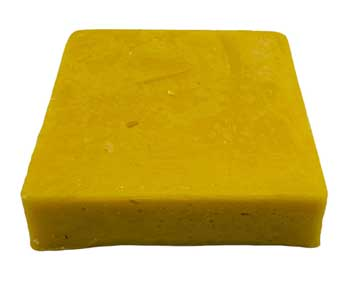
This is beeswax as it comes from rendering the comb, poured into a solid block. In that form it was traded for candles, sealing wax, polish, waterproofing and metal casting.
Uses by Tradition
Witchcraft & Folk Magick
- Altar candles: grate the block, melt it and pour your own candles in tins or jars.
- Charm seals: drip melted wax over a knotted charm bag or folded petition to close it.
Ceremonial & Occult Magick
- Images and candles: the Key of Solomon specifies virgin wax for consecrated candles and figures.
- Talisman seals: a disc of wax can carry an engraved seal or character where metal is not to hand.
Demonology & Black Magick
- Wax images: a figure carved or modelled from the block is named for the target, then bound, pierced or melted.
- Sealing a binding: name-papers are sealed under a thick layer of wax to keep the target held.
A Simple Working
- Grate a quarter of a cup of beeswax from the block.
- Melt it in a heatproof bowl over hot water.
- Stand a cotton wick upright in a small clean tin.
- Stir a pinch of dried herb suited to your aim into the wax.
- Pour the wax around the wick, stating what the candle is for.
- Let it set overnight before lighting it on your altar.
Pairs Well With
- Frankincense, to scent consecration candles.
- Bay leaves, ground into solar candles.
- Activated charcoal, to darken wax for banishing work.
- Cotton wicks, for pouring your own candles.
Lore & History
The Exsultet, sung over the Easter candle in the Latin rite, praises the mother bee who made its wax. Medieval churches were among the largest buyers of beeswax in Europe.
What You Receive
Whole beeswax block, available in 1 lb.
Did You Know?
Beeswax models are the basis of lost-wax casting, the method used to cast bronze statues since antiquity.
| Weight | 1.2 lbs |
|---|
Related products

All Oils
Price range: $3.25 through $80.25
This product has multiple variants. The options may be chosen on the product page


All Oils
Price range: $3.25 through $80.25
This product has multiple variants. The options may be chosen on the product page