


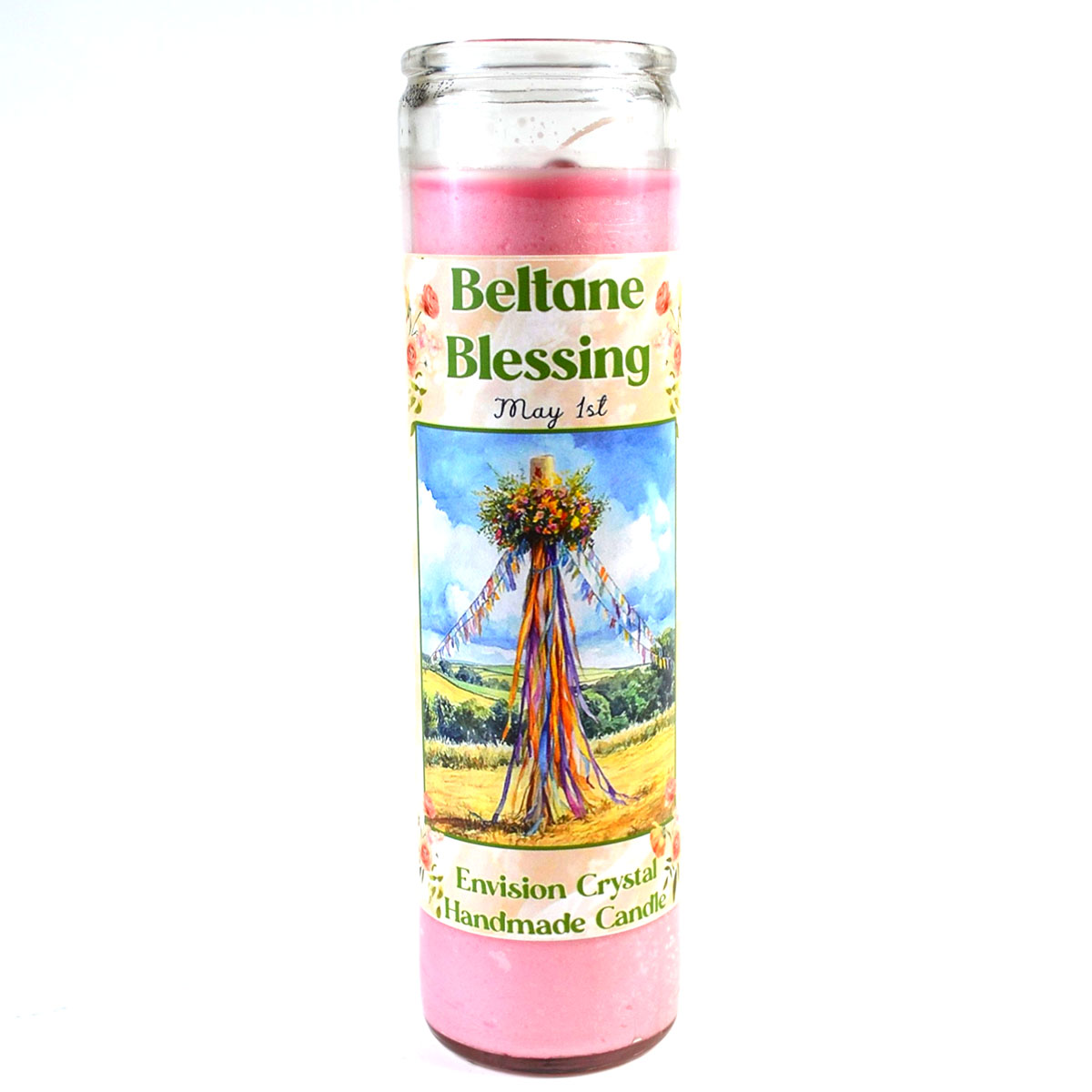
Beltane scented jar candle
$21.95
A candle for the Beltane fires
A ritual jar candle made for Beltane, the May festival of fire, fertility, love and the start of summer.
Quick Uses
- Passion: burn it in the bedroom on Beltane eve with a red ribbon tied around the jar.
- Abundance: set seeds, a coin or a written wish beside the candle and plant or keep them afterwards.
- Sabbat flame: use it as the central fire of a Beltane circle when a bonfire is not possible.
How to Use It
Witchcraft & Folk Magick
- Love and passion: burn the candle in the bedroom on Beltane eve with a red ribbon tied around the jar.
- May dew: collect dew at dawn on 1 May, wash your face with it and light the candle afterwards for glamour.
- Fertility and abundance: set seeds, a coin or a written wish beside the candle and plant or keep them after the burn.
Ceremonial & Occult Magick
- Sabbat flame: use it as the central fire of a Beltane circle when an outdoor bonfire is not possible, jumping a small symbolic flame-line nearby.
A Simple Working
- Before sunrise on 1 May, gather a little dew on a clean cloth.
- Light the candle and wipe your face with the dew cloth.
- Tie a red ribbon around the jar, saying what you want to grow this summer.
- Place a few flower seeds in a small pot of soil beside the candle.
- Let the candle burn for a few hours that day.
- Water the seeds and keep the ribbon as a charm until autumn.
Pairs Well With
- Fresh flowers: to garland the altar and the jar.
- A red ribbon: for love and binding knots at Beltane.
- Rose petals: for love work on the same night.
- Flower seeds: to plant as a fertility and abundance charm.
What You Receive
One Beltane ritual jar candle topped with a scent and herb blend; colours vary from candle to candle; burns approximately 3 1/2 days.
Origin & Lore
Beltane, held on 1 May, opened the summer half of the year in Gaelic Ireland and Scotland. It was a fire festival: herds were driven out to summer pasture and the household fire was renewed, and in modern witchcraft it is the sabbat of love, sexuality, fertility and the greening of the land.
On Beltane morning, girls went out before dawn to wash their faces in the May dew, trusting it to keep them beautiful for the year.
The 10th-century Irish glossary attributed to Cormac mac Cuilennáin describes two fires lit at Beltane by the druids, with cattle driven between them to protect them from disease for the year. In the Scottish Highlands, Beltane fires were lit on hilltops well into the 18th and 19th centuries, and the May Queen and maypole carry the spirit of the day in English custom.
Did You Know?
Bealtaine is still the Irish word for the month of May.
| Weight | 1.2 lbs |
|---|
Related products


