Bergamot oil
Price range: $6.55 through $80.25
Bright citrus for money and success · Available in 3 sizes
Bergamot oil carries the bright, bittersweet scent of the Italian citrus, used for money, success and a quick, clear mind for business.
Quick Uses
- Money drawing: dress green candles or the corners of business cards with it.
- Gambling: rub a drop between the palms before playing cards or buying a ticket.
- Success: anoint a yellow or orange candle before an interview or sale, and wear a drop on the day.
- Clear thinking: add a drop to a diffuser or a bowl of warm water while studying or planning.
How to Use It
Hoodoo & Rootwork
- Money drawing: bergamot is a frequent ingredient in money and success formulas; dress green candles or the corners of business cards with it.
- Gambling hand: rub a drop between the palms before playing cards or buying a ticket.
Witchcraft & Folk Magick
- Success: anoint a yellow or orange candle before an interview, sale or meeting, and wear a drop on the wrist on the day.
- Clear thinking: add a drop to a diffuser or a bowl of warm water while studying or planning a project.
- Bright home: a few drops in a floor wash give a fresh, cheerful lift after a gloomy spell.
A Simple Working
- On a Wednesday or Thursday, write your goal on a business card or a slip of paper.
- Put a drop of bergamot oil at each corner of the card.
- Dress a yellow chime candle with the oil, drawing upward toward the wick.
- Place the card under the candle holder and light it.
- Read the goal aloud three times while the candle burns.
- Carry the card with you to the meeting or interview.
Pairs Well With
- A yellow chime candle: for success and communication.
- Cinnamon: for heat and speed in money work.
- Orange peel: for a brighter citrus luck blend.
- Pyrite: to anchor money work on the altar.
What You Receive
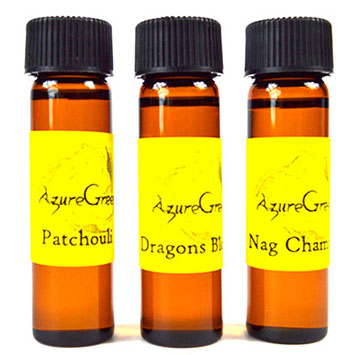
Bergamot oil, a scented anointing oil, available in 2 dram, 1 oz and 16 oz.
Origin & Lore
Bergamot orange (Citrus bergamia) is grown mainly in Calabria, at the toe of Italy. Its peel has been used in perfume since the late seventeenth century and was a key note of the original eau de Cologne. Its everyday fame comes from Earl Grey tea, which is flavoured with it.
Open a tin of Earl Grey and you are smelling bergamot, a sour little citrus grown almost entirely on one stretch of Italian coast.
Giovanni Maria Farina’s eau de Cologne, created in Cologne in 1709, built its fresh scent on citrus notes including bergamot. The wild plant called “bergamot” in North America is a different thing entirely: bee balm, Monarda, named for its similar smell.
Did You Know?
Earl Grey tea is named after Charles Grey, 2nd Earl Grey, British Prime Minister from 1830 to 1834, though how the blend came to bear his name is still argued over.
| Weight | N/A |
|---|---|
| Size | 2 dram, 1 oz, 16 oz |
Related products