
Black Faux Wooden Handled Athame (9″)
$20.85
A huntsman’s black-hilted blade for the circle
The athame is the ritual knife of witchcraft and ceremonial magick, traditionally used to cast the circle, direct will and command spirits.
Quick uses
- Circle casting: draw the boundary of the working space.
- Will: direct energy into a spell or object.
- Spirit work: hold it as a sign of authority before spirits.
In stock
How to Use It
Witchcraft & Folk Magick
- Trace the circle clockwise with the point, seeing a line of power rise behind it.
- Use it to draw pentagrams at the four quarters when calling the elements.
- Keep the blade wrapped and on the altar between rites, and let no one else handle it, so it carries only your own will.
Ceremonial & Occult Magick
- The black hilt follows the old grimoire instruction for a black-handled knife of art.
- Use it to banish with the pentagram ritual at the beginning and end of each rite.
Demonology & Black Magick
- The Key of Solomon calls for a black-hilted knife to draw the circle and hold spirits in their place, and this blade fits that tradition.
- Practitioners point the athame toward the triangle of art when giving the charge and the licence to depart.
- Use it to carve a spirit’s seal into a black candle before an evocation.
A Simple Working
- Cleanse the blade in salt water and dry it.
- Pass it through incense smoke and over a candle flame.
- Anoint the hilt with oil and dedicate it aloud to your work.
- Cast a circle with it, beginning in the east.
- Return it to its sheath and keep it on the altar for ritual use.
Pairs Well With
- Chalice: the counterpart of the blade on the altar.
- Black candles: for spirit and protection work.
- Consecration oil: to anoint the hilt.
- Altar cloth: to rest the blade on.
- Salt: for consecration and cleansing.
What You Receive
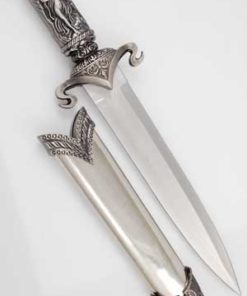
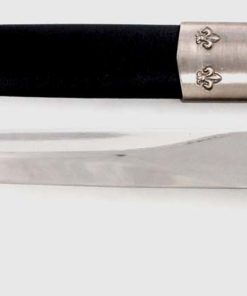
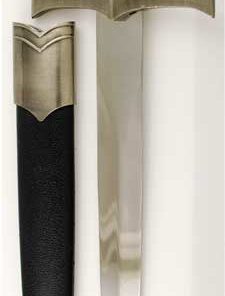
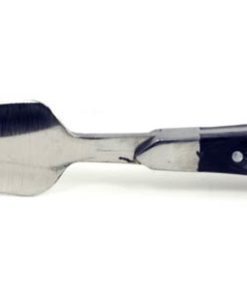
One black faux wood handled athame with a stainless steel leaf-shaped blade and sheath, approximately 9 1/2″ overall with a 5″ blade.
Origin & Lore
The ritual knife of art appears in the Key of Solomon and other grimoires, where it is made and consecrated on a set day and hour, with a black hilt inscribed with signs.
Gerald Gardner brought the athame into modern witchcraft in the mid 20th century as one of the essential working tools.
Did You Know?
Many witches hold that the athame should never draw blood, though some traditions see the blade as the extension of the practitioner’s own will.
| Weight | 0.70 lbs |
|---|
You may also like…
Related products