



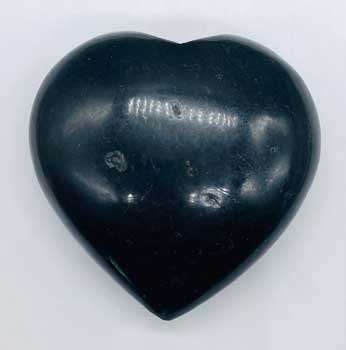
Black Tourmaline Heart (3″)
$18.65
A Shielded Heart
A large heart of polished black tourmaline, chosen by practitioners who want warding work centred on a partner, a family or their own heart.
Quick Uses
- Heart Ward: Set it on the photo of someone you love to keep envy and ill-wishing off them.
- Home Guard: Place it beside the front door with the point of the heart facing outward.
- Hex Sponge: Hold it after an argument or a nasty encounter, then cleanse it in smoke.
How to Use It
Witchcraft & Folk Magick
- Lay it on a family photo inside a ring of salt to guard a household from gossip and evil eye.
- Keep it under the pillow of a bed where a couple sleeps to hold outside interference away from the relationship.
Hoodoo & Rootwork
- Dress it with Fiery Wall of Protection oil and set it on a petition naming the person you are guarding.
- Place it in the centre of a sweetening jar for a relationship that is being attacked from outside.
Ceremonial & Occult Magick
- Set it at the northern quarter of the circle as a Saturnian anchor during protective rites.
- Trace a banishing pentagram over it and keep it as a standing ward on the altar.
Demonology & Black Magick
- Hold it over your heart during evocation as a personal shield while the spirit is present.
- Set it on a binding petition to hold the target’s malice away from the person you are protecting.
A Simple Working
- Write the full name of the person to be protected on a slip of paper.
- Draw a circle of salt on a small plate and lay the paper in the centre.
- Set the tourmaline heart on the paper.
- Light a black chime candle beside the plate.
- State aloud what the heart is guarding them from.
- Let the candle burn out and keep the heart on the paper until you feel the danger has passed.
Pairs Well With
- Fiery Wall of Protection Oil: A classic hoodoo dressing for warding stones and petitions.
- Black Chime Candles: Short burns for protective and binding work.
- Rose Quartz: Adds a loving current to a protective heart working.
- Sea Salt: For the warding circle and for cleansing the stone.
What You Receive
One black tourmaline heart, shaped and polished, approximately 3″. From India. Natural stones vary in size, colour and shape, and each heart carries its own natural inclusions.
Origin & Lore
Black tourmaline is the iron-rich variety of tourmaline known to mineralogists as schorl. In modern practice it is one of the most widely used warding stones, kept by doors and worn against hostile influence.
The name tourmaline comes from the Sinhalese turmali, a word Sri Lankan gem traders used for mixed coloured stones. The old German name schorl has been in use since at least the 1500s and is usually traced to the mining village of Zschorlau in Saxony.
Did You Know?
Tourmaline becomes electrically charged when heated, and Dutch traders once used warmed stones to pull ash out of their pipes, giving it the nickname aschentrekker, ash puller.
Related products


