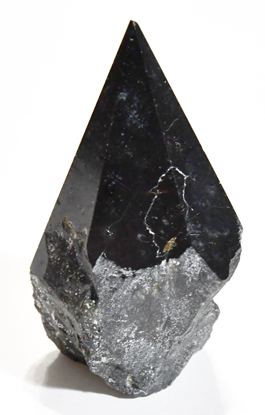
Black Tourmaline Top Polished Point
$12.05
Standing Ward Of Black Tourmaline
A black tourmaline point with a raw base, polished top and flat bottom, set by practitioners at doorways, altars and grid centres to absorb hostile work and hold a ward.
Quick Uses
- Door Ward: Stand it by your front door with the tip pointing outward to send unwanted influences back out.
- Grid Anchor: Place it at the centre or a corner of a protection grid as the heavy, grounding stone.
- Altar Guard: Keep it on the edge of your altar during dark work as a barrier stone.
How to Use It
Witchcraft & Folk Magick
- Set one point at each entrance of the home, tips facing out, and renew the ward by smoking it with rosemary each new moon.
- Place it beside the bed with a sprig of rue when sleep is being disturbed by unwanted presences.
Hoodoo & Rootwork
- Stand it on a reversing petition with the tip aimed away from your name to send a crossing back to its source.
- Keep it inside a protection packet with salt and red pepper buried by the front step.
Ceremonial & Occult Magick
- Charge it on a Saturday in the hour of Saturn and use it to mark the boundary of your circle before banishing rites.
- Set it at the western quarter of a working space as the earthy, Saturnian anchor.
Demonology & Black Magick
- Place it at the edge of the triangle of art during evocation to hold the spirit’s influence outside your circle.
- Set it on a binding petition with the tip pressed onto the target’s name to pin and weigh the work down.
A Simple Working
- Sweep the room or doorway you want to protect with a broom, moving toward the exit.
- Sprinkle a line of salt across the threshold.
- Light a black chime candle beside the tourmaline point.
- Hold the point and state clearly what is no longer allowed to cross.
- Stand it by the door with the tip facing outward.
- Let the candle burn out and leave the point there as a standing ward.
Pairs Well With
- Salt: The oldest threshold barrier, laid alongside the point at doors and windows.
- Black Chime Candles: For short protection and reversing burns.
- Rue: A traditional protective herb to place beside the stone.
- Obsidian: A second dark stone for scrying and cutting ties in the same ward.
What You Receive
One black tourmaline point with a raw base and polished top, with a flat bottom so it stands upright. Each piece is unique in shape and size and contains natural inclusions.
Origin & Lore
Black tourmaline is the iron-rich form of tourmaline known to mineralogists as schorl, a name usually traced to the old mining village of Zschorlau in Saxony.
Dutch traders of the 18th century called tourmaline aschentrekker, ash-puller, because a warmed crystal draws ash and dust to itself. That behaviour fed its modern reputation as a stone that pulls in and holds negativity.
Did You Know?
Tourmaline is both pyroelectric and piezoelectric: heating or squeezing a crystal makes its ends take on opposite electrical charges.
Related products