


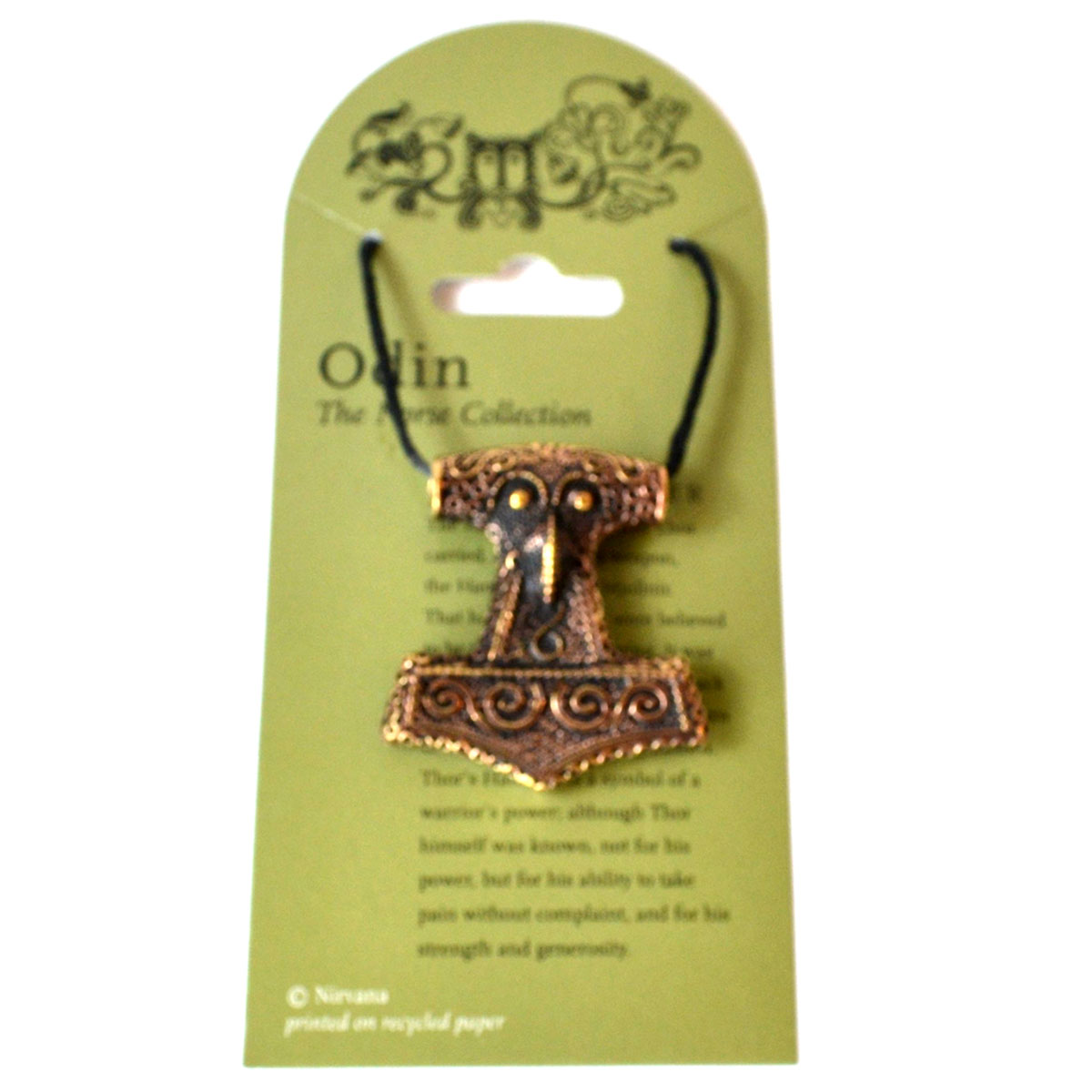

Bronze Thor’s Hammer Amulet with Raven Head
$34.05
Thunder And Ravens In Bronze
A heavily carved bronze Mjölnir crowned with a raven’s head, for heathens and occultists who want Thor’s warding hammer and Odin’s watchful birds in one amulet.
Quick Uses
- Warding Pendant: Wear it on its cord over the breastbone when you need courage and a hard line of protection.
- Altar Hallowing: Lay it on your altar and trace the hammer sign over offerings to hallow them.
- Thursday Work: Charge it on a Thursday, Thor’s day, during a thunderstorm if you can catch one.
How to Use It
Witchcraft & Folk Magick
- Make the hammer sign over doorways with the amulet held in your fist, then hang it by the door for a few nights to guard the house.
- Hold the raven head and ask for clear sight before casting runes or reading omens.
Ceremonial & Occult Magick
- Use it as a hallowing tool in heathen blót, tracing the hammer over the horn, the offering and the space.
- Set it on a Jupiter-hour altar for workings of authority and strength, as Thursday is named for Thor.
Demonology & Black Magick
- Wear it during evocation as a heavy personal ward; the hammer was the weapon that kept giants and hostile powers at bay.
- Strike the amulet three times against a cursed object or name-paper to break it before burning, as a banishing stroke.
A Simple Working
- Wait for a Thursday evening, ideally with rain or thunder.
- Light a red candle and pour a small cup of mead or ale as an offering.
- Hold the amulet up and trace the hammer sign: down, then across.
- Call on Thor to hallow the hammer and on Odin’s ravens to watch for you.
- Pass the amulet over the candle flame three times.
- Pour the offering outside on the earth and put the amulet on.
Pairs Well With
- Rune Set: Read with the raven head on the table for Odin’s sight.
- Mead or Honey: The traditional heathen offering to accompany the hallowing.
- Red Chime Candles: Mars-red fire for courage and protection work.
- Oak Leaves: The oak is linked to Thor and thunder in Germanic tradition.
What You Receive
One bronze Thor’s Hammer amulet with a carved raven’s head, supplied on a cord. Approximately 1 1/2" x 1 1/2".
Origin & Lore
Mjölnir is the hammer of Thor, the Norse thunder god, who used it to fight giants and to hallow. Hammer-shaped pendants were worn in Scandinavia during the Viking Age, and many have been found in graves and silver hoards.
The ravens are Odin’s: in the Eddic poem Grímnismál, Huginn and Muninn (Thought and Memory) fly over the world each day and return to tell him what they saw.
Did You Know?
A soapstone mould found at Trendgården in Denmark was carved to cast both Thor’s hammers and Christian crosses, so a smith of the 10th century could serve either customer.
Related products


All Jewelry


