



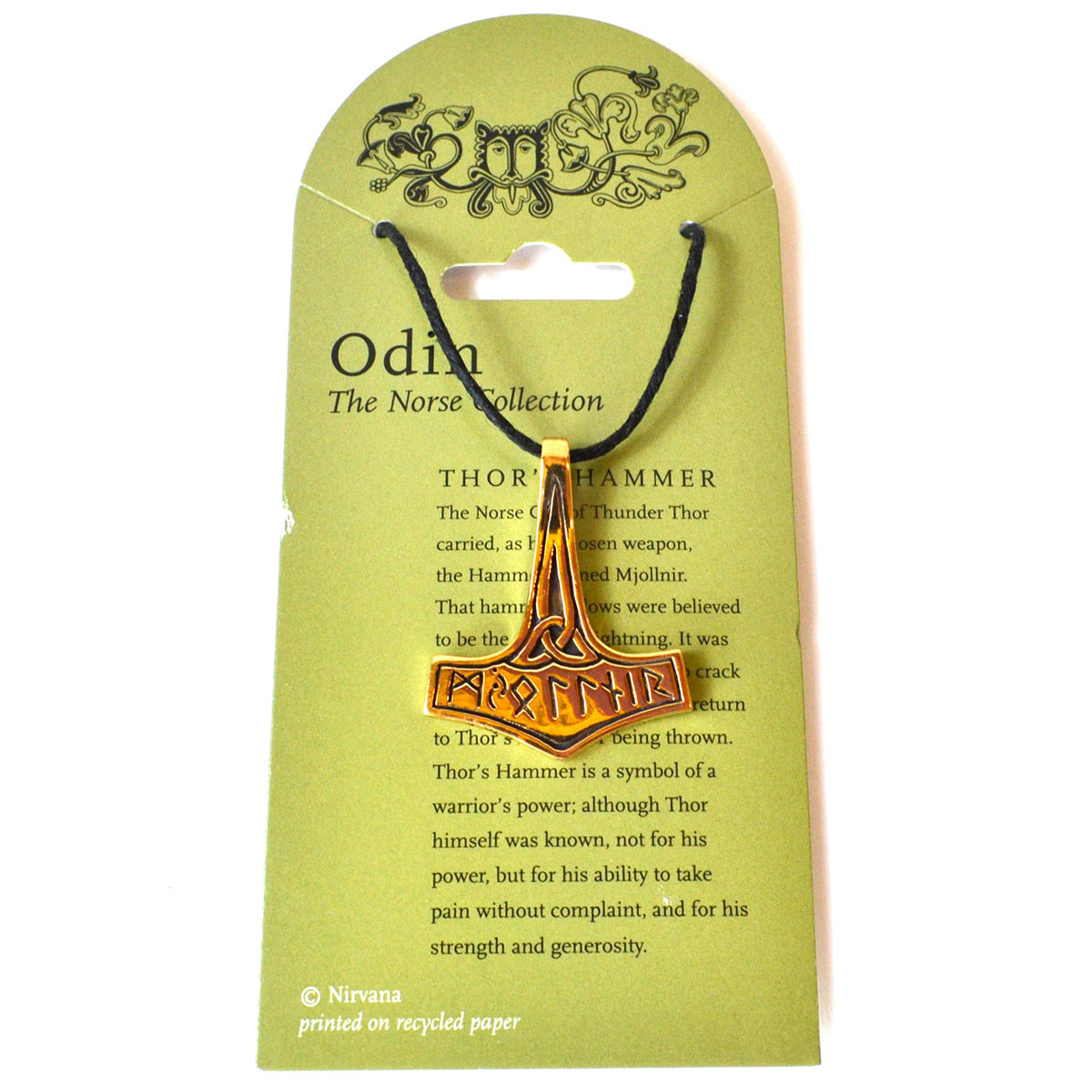
Bronze Thor’s Hammer with Triquetra and Runes
$26.35
Hammer Carved With Runes
A simply carved bronze Mjölnir with a triquetra on the handle and Elder Futhark runes across the head, for rune workers who want their ward written in the old letters.
Quick Uses
- Rune Ward: Wear it during rune casting and galdr so the hammer guards the reading.
- Threshold Hallowing: Trace the hammer sign at each door of a new home while holding it.
- Marriage Blessing: Lay it in a partner’s lap at handfastings to hallow the union.
How to Use It
Witchcraft & Folk Magick
- Chant the runes carved on the head one by one while holding the hammer to charge it.
- Place it on a rune spread at the end of a reading to seal and protect what was seen.
Ceremonial & Occult Magick
- Use it as a hallowing tool at a heathen wedding or handfasting.
- Keep it on a Jupiter altar on Thursdays for strength, authority and protection rites.
Demonology & Black Magick
- Carve a binding rune on a black candle and set the hammer before it while you work a binding on an enemy.
- Wear it as protection when calling on hostile or chthonic powers, keeping its runed face outward.
A Simple Working
- Lay out your rune set or write the runes Thurisaz and Algiz on paper.
- Light a white candle and set the hammer beside it.
- Sing or speak each rune name three times over the hammer.
- Trace the hammer sign over the paper and fold it.
- Keep the folded paper under the candle until it burns out.
- Wear the hammer and store the paper on your altar.
Pairs Well With
- Elder Futhark Rune Set: Read and chant the same letters carved on the hammer.
- Rune Cloth: A proper surface for casting with the hammer as guard.
- Mead: The traditional offering in heathen hallowing.
- Black Chime Candles: For binding-rune work carried out under the hammer’s protection.
What You Receive
One bronze Thor’s Hammer pendant with a triquetra on the handle and Elder Futhark runes on the head, supplied on a cord. Approximately 1 1/2" x 1 1/4".
Origin & Lore
In the Eddic poem Þrymskviða, the giant Þrymr steals Mjölnir, and Thor gets it back by going to the giant’s hall disguised as the bride Freyja. When the giant calls for the hammer to hallow the bride, Thor grabs it and kills him.
The triquetra is a three-cornered interlaced knot found on Viking Age metalwork and runestones as well as in Insular Christian art.
Did You Know?
The Elder Futhark of 24 runes had largely given way to the 16-rune Younger Futhark by the start of the Viking Age, so most Viking runestones are carved in the younger script.
Related products


