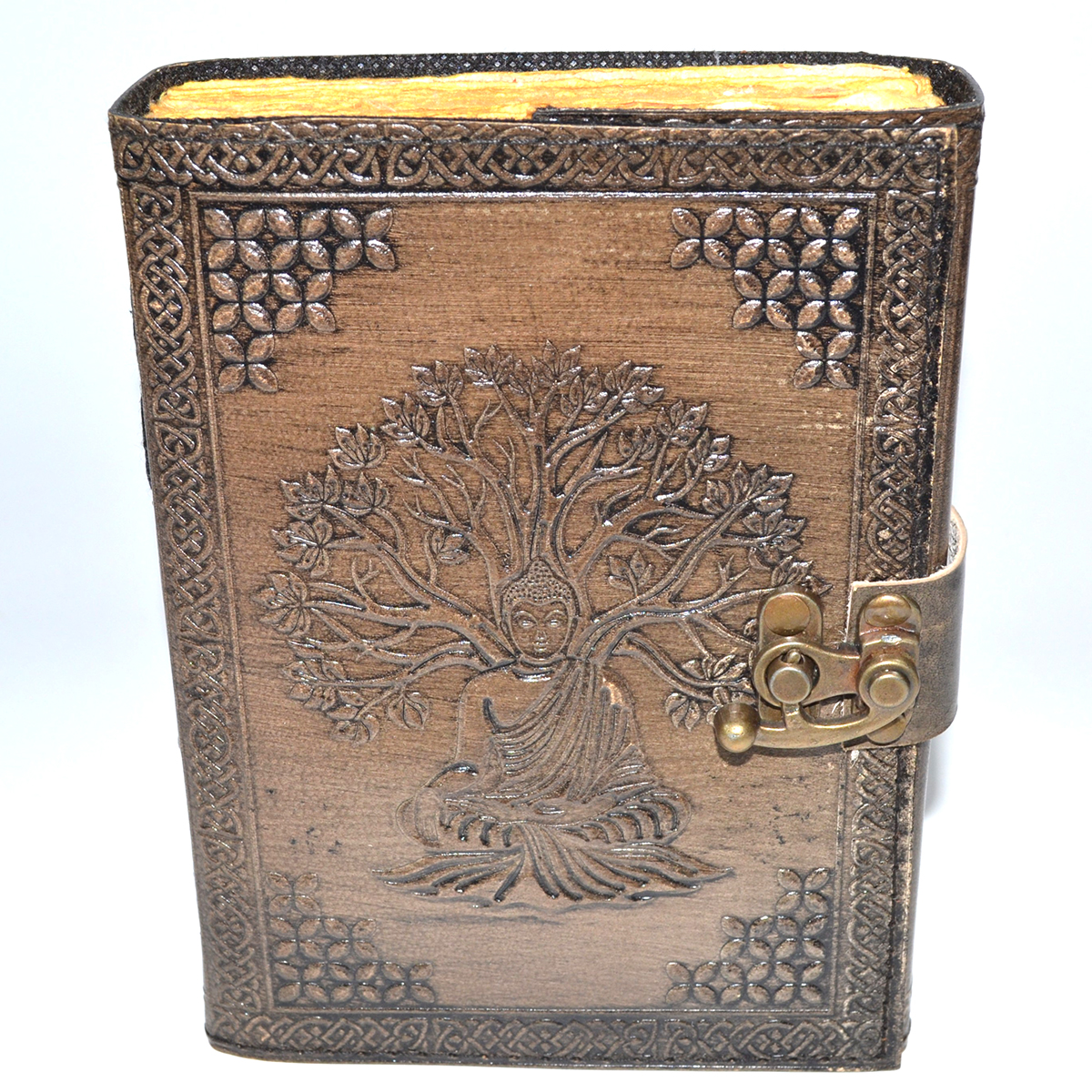
Buddha & Tree of Life Leather Journal with Latch
$31.85
A Quiet Book for Meditation Work
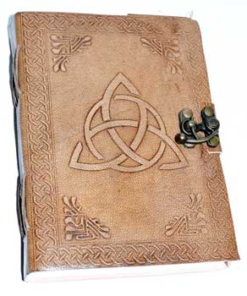
A latched leather journal showing the Buddha beneath the Bodhi tree, used to keep meditation notes, dream records and reflections apart from everyday writing.
Quick Uses
- Meditation Log: Write the date, length and anything that surfaced after each sit.
- Mantra Pages: Copy out the mantras or prayers you work with and tally your repetitions.
- Reflection: End each week with a page on what shifted and what still needs attention.
- Altar Book: Keep it on your altar beside the incense as a record of offerings and observances.
How to Use It
Witchcraft & Folk Magick
- Keep a record of your altar work: what was offered, when, and what you noticed afterwards.
- Use it to track herbal teas, baths and cleansings and how you felt after each.
Ceremonial & Occult Magick
- Record meditation and visualisation exercises in detail, the way a serious practitioner keeps a magickal diary.
- Note dreams and insights alongside the planetary day and hour so correspondences become personal knowledge.
Hoodoo & Rootwork
- Write down prayers and psalms you use in your work and the purpose each served.
- Track candle work for peace in the home, noting how each candle burned.
A Simple Working
- Clean your altar space and light a stick of sandalwood incense.
- Sit quietly with the journal in your lap for a few minutes, breathing slowly.
- Open to the first page and write a short dedication stating the book is for meditation and reflection.
- Hold the open pages in the smoke for a few breaths.
- Sit for ten minutes in silence.
- Write the first entry: the date, the time and whatever came to mind during the sit.
Pairs Well With
- Sandalwood incense, a classic for meditation and quiet altar work.
- A mala of 108 beads, so mantra counts can be logged in the journal.
- A singing bowl, to open and close each sitting before you write.
- An amethyst point, kept on the closed book between sessions.
What You Receive
One leather journal with a latch closure. The front shows the Buddha seated beneath the Bodhi tree; the design wraps to the back, which carries a Buddha face and a lotus in bloom. Filled with aged, textured pages.
Origin & Lore
Tradition holds that Siddhartha Gautama reached enlightenment while sitting beneath a fig tree at Bodh Gaya in India, and that tree, Ficus religiosa, became known as the Bodhi tree, the tree of awakening.
Keeping a written record of practice is old in every contemplative tradition. Monks copied sutras by hand as devotional work, and Western occultists later adopted the same discipline in the magickal diary.
Did You Know?
A cutting of the original Bodhi tree was carried to Anuradhapura in Sri Lanka in the 3rd century BCE, and the tree grown from it, the Jaya Sri Maha Bodhi, is still standing and venerated today.
| Weight | 1.3 lbs |
|---|
Related products


All Journals