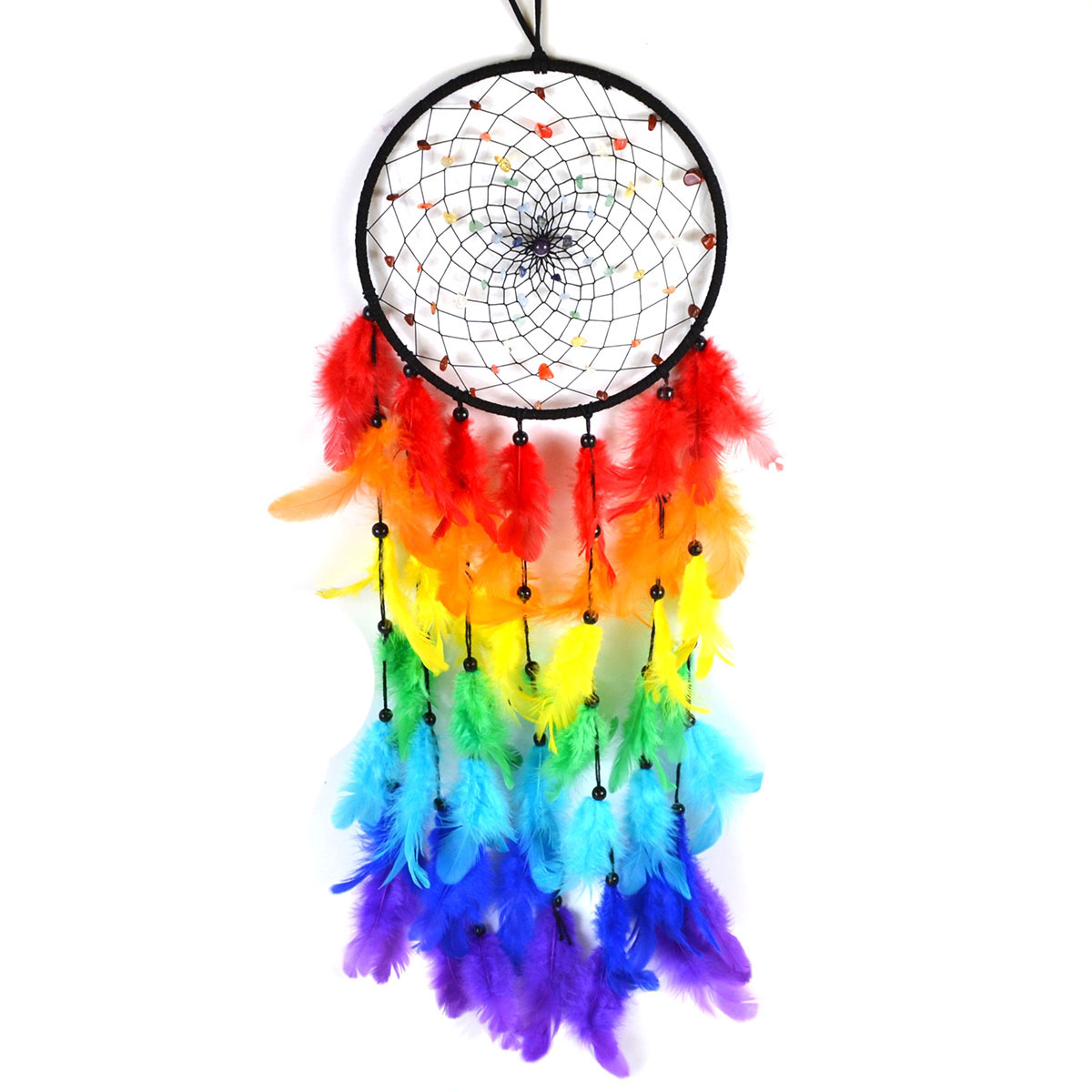


Chakra Stone Dream Catcher (6 3/4″ x 22″)
$29.65
Stones for Every Centre
A dream catcher strung with a full spectrum of stones aligned to the seven chakras, hung for balance, protection and peaceful nights.
Quick Uses
- Bedside: Hang it above the bed to watch over sleep and dreams.
- Balance Check: Touch each stone in turn while breathing into the matching centre.
- Treatment Room: Hang it where you do energy or reiki work.
- New Home: Hang it in a new home as a first blessing for harmony.
How to Use It
Witchcraft & Folk Magick
- Hang it on a new moon to begin a cycle of balancing work.
- Cleanse it in moonlight each month so the stones stay bright.
- Lay a small piece of each matching stone on the windowsill beneath it during the full moon.
Hoodoo & Rootwork
- Hang it in the bedroom of someone going through a hard season, with a whispered prayer for peace.
- Wipe it gently with peace water to refresh it.
Ceremonial & Occult Magick
- Use its column of stones as a focus for the middle pillar or chakra rising exercises.
- Hang it in the temple as a reminder of balance between the centres.
- Move your attention stone by stone as you chant a vowel or tone for each centre.
Demonology & Black Magick
- Hang it at your bedside after intense spirit work to restore balance before you sleep.
- Keep it outside the working space as a clear line between temple and rest.
- Touch the top stone and the bottom stone together as a quick grounding gesture before sleep.
A Simple Working
- In the evening, sit facing the dream catcher with a lit white tealight.
- Begin at the lowest stone and name the centre it stands for.
- Breathe into that place in your body three times.
- Move up stone by stone to the top.
- Close by speaking a short wish for balance in the night ahead.
- Hang it above your bed and let the tealight finish.
Pairs Well With
- Long Chakra Dream Catcher: A larger colour-only piece for a wall.
- Lavender: A soft scent for the bedroom.
- Selenite: For keeping the stones clear.
- Meditation Cushion: For the nightly balancing practice.
- Clear Quartz: To amplify and cleanse the whole set.
What You Receive
One chakra dream catcher, approximately 6 3/4″ x 22″, featuring a full spectrum of stones aligned with the seven chakras.
Origin & Lore
Each stone on this piece corresponds to one of the seven chakras, the energy centres of Indian yogic tradition, following the modern practice of matching stones to centres by colour.
The hoop and web come from the Ojibwe dream catcher, hung to guard sleepers from harm.
Did You Know?
The seven-chakra system most people know today draws largely on a 1577 Sanskrit text, the Sat-Chakra-Nirupana, which reached the West through Arthur Avalon’s 1919 translation.
Related products