



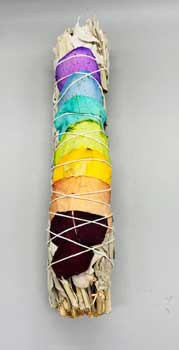
Chakra White Sage Smudge Stick (9″)
$13.15
A Rainbow Bundle for Energy Work
A large 9″ white sage stick with leaves in the chakra colours woven through it, burned to clear the body’s energy centres before meditation or ritual.
Quick Uses
- Centre by Centre: Hold the smoke at each of the seven centres from root to crown.
- Meditation Prep: Smoke your space and cushion before a long sitting.
- Reiki or Energy Session: Clear a room before and after energy work.
How to Use It
Witchcraft & Folk Magick
- Smoke yourself from the base of the spine to the crown, pausing at each centre and naming its colour.
- Cleanse the seven stones of a chakra set in the smoke before laying them out.
Hoodoo & Rootwork
- Smoke yourself before a spiritual cleansing bath, working from head to feet as rootworkers traditionally do.
- Burn it in a room where you will read for clients to keep the space clear between sessions.
Ceremonial & Occult Magick
- Use it before Middle Pillar work or other exercises that move energy through the body.
- Smoke the area in front of your third eye before scrying.
Demonology & Black Magick
- Clear your own energy after spirit contact, giving extra time at the crown and heart.
- Smoke yourself before trance or possession work so you start from a clean centre.
A Simple Working
- Sit comfortably facing east and light a white tealight.
- Light the smudge stick from the flame.
- Hold the smoke near the base of your spine and picture red light.
- Move up through orange, yellow, green, blue and indigo, pausing at each centre.
- Finish above your head with violet or white light.
- Snuff the stick and sit in silence for a few minutes.
- Let the candle burn down.
Pairs Well With
- Chakra Stone Set: Seven stones to lay on each centre.
- White Tealights: A simple flame for meditation.
- Abalone Shell: To hold the large stick between uses.
- Smudging Feather: To guide the smoke around the body.
What You Receive
One large 9″ white sage smudge stick with leaves in the chakra colours woven into the bundle.
Origin & Lore
The chakras, from a Sanskrit word for wheel, come from Indian tantric and yogic texts, where they are described as centres of subtle energy in the body. The seven-colour rainbow scheme used today is a 20th-century Western addition rather than part of the old texts.
White sage itself is a ceremonial plant of the Indigenous peoples of southern California. This bundle brings the two ideas together for modern energy work and meditation.
Did You Know?
Older tantric texts describe different numbers of chakras, and seven only became the standard count in the West in the 20th century.
Related products


