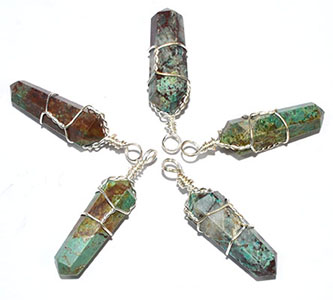
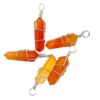
Chrysocolla Wire-Wrapped Point Pendants (Set of 5)
$19.75
Blue-Green Stone of Gentle Words
Five wire-wrapped chrysocolla points in vivid blue and green, worn by practitioners for calm communication, peaceful relationships and feminine wisdom.
Quick Uses
- Kind Words: Wear one when you need to speak gently and be heard.
- Household Peace: Place one in the room where the family gathers.
- Teaching: Wear one when you lead a class, circle or study group.
- Sisterhood: Share the five pendants among friends as a bond of mutual support.
How to Use It
Witchcraft & Folk Magick
- Lay one in a bowl of water under the new moon, then wear it to speak softly and truthfully.
- Give one to each friend in a women’s circle as a sign of shared support.
Hoodoo & Rootwork
- Place one in a Peace Water wash bowl for a moment before you mop the floors.
- Keep one beside a honey jar for sweetening a strained relationship.
- Carry one in a blue bag with a pinch of lavender when you go to make peace with a relative.
Ceremonial & Occult Magick
- Work it as a Venusian copper stone during rituals for harmony and balance.
- Wear one during group ritual to help keep the circle’s voices in accord.
Demonology & Black Magick
- Offer one to a spirit of peace or a gentle familiar in thanks for its help.
- Wear one to keep your words measured when negotiating with a spirit.
A Simple Working
- Pour a cup of spring water into a white bowl.
- Add a pinch of dried lavender and stir clockwise.
- Dip a chrysocolla pendant briefly into the water and speak a wish for peace in the home.
- Light a blue tealight beside the bowl.
- Sprinkle a few drops of the water in each corner of the main room.
- Hang the pendant in that room once the tealight has burned out.
Pairs Well With
- Lavender: A soft herb for peace waters and household blessing.
- Blue Tealights: Small lights for calm, gentle workings.
- Turquoise: Another blue-green stone with a long protective history.
- Honey: For sweetening work alongside the stone.
What You Receive
A set of five chrysocolla points, each wire wrapped as a pendant. Each stone shows its own blend of blue and green.
Origin & Lore
Chrysocolla is a hydrated copper silicate, found where copper deposits weather near the surface. Its copper content gives it the same blue-green palette as malachite and turquoise, and in Western correspondences it shares their link to Venus and the heart.
The name was used by the ancient Greek writer Theophrastus for materials used in soldering gold. In modern practice the stone is worked for calm speech and harmony.
Did You Know?
The name chrysocolla comes from the Greek chrysos, gold, and kolla, glue, after materials once used to solder gold.
Related products