

Clover, Sweet oil
Price range: $3.25 through $80.25
A sweet oil for many workings · Available in 3 sizes
A sweet clover oil for anointing and spellcraft, worked for exorcism, healing, love, money and protection.
Quick Uses
- Protection: anoint the doors and windows to protect the home and drive away unwanted spirits.
- Candle dressing: dress a green candle for money or a pink one for love.
- Floor wash: add to a cleansing bath or floor wash to remove evil influences from the home.
- Talismans: anoint a Mercury talisman for money and communication.
How to Use It
Witchcraft & Folk Magick
- Anoint the doors and windows for protection and to drive away unwanted spirits.
- Dress a green candle for money and a pink one for love.
Hoodoo & Rootwork
- Add to a cleansing bath or floor wash to remove evil influences from the home.
- Anoint a money mojo with a four-leaf clover if you have one.
Ceremonial & Occult Magick
- Anoint a Mercury talisman for money and communication.
- Dress candles for an exorcism or house-clearing rite.
A Simple Working
- Set a white candle and a small dish of salt on a table near your front door.
- Dress the candle with sweet clover oil from wick to base.
- Add three drops of oil to the salt and mix it with your finger.
- Light the candle and sprinkle the salt across the threshold, saying that only good may enter.
- Anoint the door frame at the top and both sides.
- Let the candle burn out and sweep the salt out of the door the next day.
Pairs Well With
- Red clover, its cousin, for love and money.
- Four-leaf clover, for luck.
- Salt, for cleansing and protection.
- A white candle, for blessing.
- Lavender, another sweet herb for a peaceful home.
What You Receive
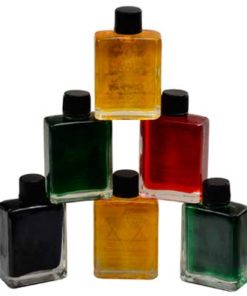
Sweet Clover oil, available in 2 dram, 1 oz and 16 oz bottles.
Origin & Lore
This is a single-note oil named for sweet clover, Melilotus officinalis, a tall yellow-flowered plant of fields and roadsides across Europe and Asia. Its warm, hay-like scent made it a strewing herb and pillow filling in old households, and in magick, like other clovers, it is worked for protection, love, money and driving away evil.
Sweet clover fills a summer meadow with the smell of honey and hay, and its old name, melilot, means “honey lotus”.
Clover has a long history in European folk magick: four-leaf clovers were carried to see fairies and for luck, and clover was placed in shoes or hung by doors for protection. Sweet clover was dried and used to scent linen and stuff pillows, and the honey from its flowers has long been prized by beekeepers.
Did You Know?
The name Melilotus comes from the Greek meli, honey, and lotos, a name the Greeks gave to several clover-like plants.
| Weight | N/A |
|---|---|
| Size | 2 dram, 1 oz, 16 oz |
Related products