

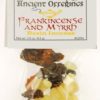
Copal resin
Price range: $2.15 through $21.95
The sacred incense of Mesoamerica · Available in 4 sizes
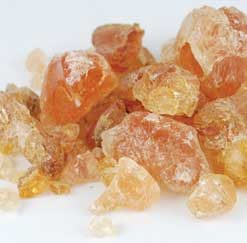
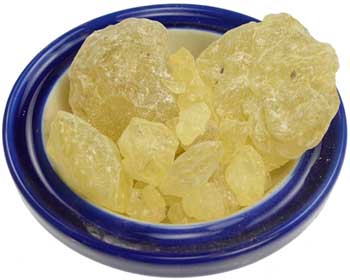
Copal resin burned on charcoal for a bright, clean, piney smoke, used for purification, offerings, limpias and the Day of the Dead.
Quick Uses
- Cleansing: walk the smoke through a room or around a person from the head down to the feet.
- Offerings: burn it for any deity or spirit where a fresh, sharp scent is wanted.
- Banishing: use the smoke to drive spirits and heavy energy out of a house.
- Ofrendas: burn it on the ofrenda on 1 and 2 November to guide the dead home.
How to Use It
Witchcraft & Folk Magick
- Cleansing: burn a piece on charcoal and walk the smoke through a room or around a person, from the head down to the feet.
- Altar offering: copal gives a bright, clean smoke that suits offerings to any deity or spirit where a fresh, sharp scent is wanted.
- Exorcism and banishing: the smoke is used to drive out spirits and heavy energy from a house.
Folk Catholicism & Spiritism
- Limpia: in Mexican curanderismo, copal smoke is passed over the body during a spiritual cleansing, often alongside an egg or a bundle of herbs.
- Day of the Dead: copal is burned on ofrendas on 1 and 2 November to guide the dead home and feed them with its scent.
- Santa Muerte devotees burn it before her image as a cleansing offering.
A Simple Working
- Light a disc of charcoal and let it ash over.
- Place a small chunk or a pinch of grains of copal on it.
- Stand the person to be cleansed facing you, or stand in the room you are clearing.
- Pass the smoke from the head down to the feet, front and back, or sweep it from the back of the room to the door.
- Say plainly what you are clearing away.
- Open a door or window to let the smoke carry it out.
Pairs Well With
- Charcoal tablets: to burn the resin on.
- A clay censer: the traditional burner for copal.
- Marigold flowers: for the Day of the Dead ofrenda.
- A white candle: for prayer and offering alongside the smoke.
What You Receive
Copal resin from Indonesia, sold by weight in a random mix of chunks up to about 1 1/2 inches down to pebbles and dust; each bag differs. Available in 1/3 oz, 1 oz, 2 oz and 1 lb.
Origin & Lore
Copal is a general name for hard, aromatic tree resins. In Mexico and Central America it comes from trees of the Bursera and Protium families, while the copal of Indonesia, the source of this resin, comes from Agathis trees of the kauri family. In Mesoamerica it has been burned since ancient times as an offering to the gods, to purify, and to feed the dead.
The Maya called it pom, the Aztecs copalli, and both burned it in such quantity that temple braziers were kept smoking day and night.
When the explorer Edward Thompson dredged the Sacred Cenote at Chichen Itza in the early 20th century, he brought up balls of copal, some painted blue, among the offerings thrown into the well. The K’iche’ Maya Popol Vuh tells of copal being offered to the gods at the first dawn. In Mexico today, copal is still sold in markets in great quantities at the Day of the Dead.
Did You Know?
The word “copal” comes from the Nahuatl word copalli, meaning incense.
| Weight | N/A |
|---|---|
| Size | 1/3 oz, 1 oz, 2 oz, 1 lb |
Related products