



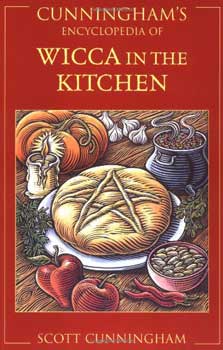
Cunningham’s Encyclopedia of Wicca in the Kitchen by Scott Cunningham
$24.19
Kitchen Witchery A To Z
An encyclopedia of food magick that shows how ordinary ingredients in your pantry carry their own magickal energies, with recipes to cook with intent.
Quick Uses
- Pantry Lookup: Look up an ingredient before you cook it into a working.
- Love Meal: Plan a meal for a partner around foods it links to love.
- Recipe Rite: Cook one of its recipes on a sabbat as your offering.
How to Use It
Witchcraft & Folk Magick
- Choose ingredients from the book for a love supper, and stir clockwise while you name your intent.
- Bake bread for a sabbat feast and look up each ingredient’s energy as you add it.
Hoodoo & Rootwork
- Use its food correspondences to choose what to set out on a plate for a spirit or ancestor.
- Sweeten a working by cooking a dish from its sweet-food entries for the person concerned.
Demonology & Black Magick
- Look up foods before preparing a feast offering to a spirit, so the dish matches what you are asking.
- Use its food entries to choose a dark, rich offering for a spirit of the underworld.
A Simple Working
- Choose one goal, such as love or psychic awareness.
- Look up two or three ingredients for that goal.
- Light a white candle in the kitchen.
- Cook a simple dish with them, stirring with your intent.
- Set a small portion aside as an offering.
- Eat the rest mindfully.
Pairs Well With
- Vanilla Beans: A classic love and sweetening ingredient.
- Peppermint: For refreshing and clearing workings.
- Bay Leaves: For wishes and kitchen protection.
- Wooden Spoon: Kept for magickal cooking only.
What You Receive
One copy of Cunningham’s Encyclopedia of Wicca in the Kitchen by Scott Cunningham.
Origin & Lore
This encyclopedia covers the magickal energies of everyday foods, from caviar, vanilla and peppermint to mushrooms, celery, artichokes and kidney beans, and how to use them for love, desire, psychic awareness and personal change. It includes twenty-seven of the author’s favourite recipes.
Scott Cunningham was one of the best-known writers on Wicca and natural magick until his death in 1993. Food has always been part of magick: offerings of bread, wine, honey and meat appear in ancient and folk rites, and harvest feasts sit at the heart of the sabbats.
Did You Know?
Vanilla comes from the seed pod of a climbing orchid, Vanilla planifolia, native to Mexico and Central America.
Related products


