


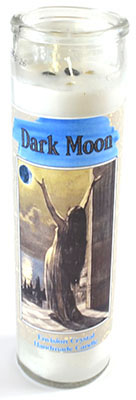


Dark Moon scented jar candle
$21.95
A jar candle for dark moon work
A bay-scented jar candle topped with bay leaves and black agate, made for dark moon inner work, release and renewal.
Quick Uses
- Release: write what you are finished with, read it by the candle and burn the paper in a heatproof dish.
- Shadow work: read the affirmation on the back aloud and journal by its light.
- Scrying: set a bowl of dark water beside the jar and gaze into the reflected flame.
- Bay petition: write one word of intent on a bay leaf from the top and burn it in the flame.
How to Use It
Witchcraft & Folk Magick
- Release: on the dark moon, write what you are finished with, read it by the candle and burn the paper in a heatproof dish.
- Shadow work: light the candle, read the affirmation on the back aloud and journal for half an hour by its light.
- Scrying: set a bowl of dark water beside the jar and gaze into the reflection of the flame.
Ceremonial & Occult Magick
- Hecate devotion: burn the candle at a three-way crossroads or a home shrine on the last night of the lunar month, with an offering of bread, eggs or garlic.
- Bay leaf petition: take one bay leaf from the top, write a single word of intent on it and burn it in the flame.
A Simple Working
- Choose the night before the new moon and darken the room.
- Light the candle and read the affirmation on the back aloud.
- Write on paper what you are releasing this cycle.
- Take a bay leaf from the top of the candle and write one word for what you will grow instead.
- Burn the paper and the leaf in a small cast iron cauldron.
- Sit in silence with the flame for a while, then bury the ash.
Pairs Well With
- Dark Moon oil: the matching oil for dressing the jar and yourself.
- Bay leaves: for writing and burning extra petitions.
- A cast iron cauldron: to burn release papers safely.
- Black obsidian: a dark mirror stone for scrying on the same night.
What You Receive
One Dark Moon ritual jar candle, topped with bay leaves and black agate, bay scented, with an image of a woman drawing down the moon and an affirmation on the back; burns approximately 3 1/2 days.
Origin & Lore
The dark moon is the stretch of nights when the moon cannot be seen at all, just before the first thin crescent of the new moon. In modern witchcraft it is kept for inward work: shadow work, meditation, releasing what is finished and quiet magick done alone, and this candle is made for lighting on or around those nights.
For a night or two each month the moon vanishes completely. Ancient Athenians marked that dark with suppers left at the crossroads for Hecate.
In classical Athens the deipnon, Hecate’s Supper, was a meal set out at crossroads at the end of each lunar month, a way of honouring the goddess and clearing the household before the new month began. Drawing down the moon was a famous boast of the witches of Thessaly, mentioned by Aristophanes and Plato, and the phrase was taken up in the 20th century as the name of a central rite in Wicca.
Did You Know?
Black agate gets its banding from layers of silica deposited slowly in cavities of volcanic rock; much of the jet-black agate on the market is dyed.
| Weight | 1.2 lbs |
|---|
Related products


