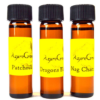
Dark Musk oil
Price range: $6.55 through $63.75
A deep musk of magnetism · Available in 3 sizes
Dark musk oil is a deep, skin-warm musk scent worn on the body for lust, magnetism and bold attraction.
Quick Uses
- Lust: wear it on the pulse points or dress a red candle with it for passion and attraction.
- Magnetism: anoint the throat and wrists before going out to be noticed and remembered.
- Confidence: rub a drop between the palms before a confrontation or an audition.
- Mojo bags: add a few drops to a love or lust bag and its contents to feed it.
How to Use It
Witchcraft & Folk Magick
- Lust: wear the oil on the pulse points, or dress a red candle with it, for passion and physical attraction.
- Magnetism: anoint the throat and wrists before going out to be noticed and remembered.
- Confidence: rub a drop between the palms before a confrontation or an audition, letting the heavy scent settle you in your body.
Hoodoo & Rootwork
- Love and lust oils: musk is a common base note in attraction and come-to-me style oils, used to dress figure candles and to wear.
- Mojo bags: a few drops on the bag and its contents feed a love or lust hand.
A Simple Working
- Choose a red figure candle or a plain red chime candle.
- Carve your name on one side and what you want to draw on the other.
- Dress the candle all over with dark musk oil, working towards yourself.
- Sprinkle a pinch of cinnamon on the oiled wax.
- Light it on a Friday night and let it burn while you dress your own wrists with the oil.
- Wear the scent the next day when you see the person you want.
Pairs Well With
- A red figure candle: for a lust working with a body to focus on.
- Cinnamon: to add heat and speed.
- Patchouli oil: another earthy, sensual base note.
- Rose oil: to soften lust towards romance.
What You Receive
Dark Musk oil in 2 dram, 1 oz and 16 oz (1 lb) sizes.
Origin & Lore
Natural musk was a secretion taken from a gland of the male musk deer of the Himalayas and Siberia, dried and traded along the Silk Road as one of the most expensive materials in the world. Perfumers used it to give scent a warm, lingering base. Today musk scents are made without animals, and ‘dark musk’ is a perfumer’s style: a heavier, smokier musk.
Musk is one of the few perfume words with a blunt origin: it comes, through Persian, from the Sanskrit word for testicle, after the gland of the male musk deer.
Musk was traded from Tibet and the Himalayas into Persia, the Arab world and China for over a thousand years, and medieval Islamic writers counted it among the finest of all scents. The heavy harvesting of musk deer led to their protection, and most musk used in perfume since the twentieth century has been synthetic.
Did You Know?
The first synthetic musk was found by accident in 1888, when the chemist Albert Baur was experimenting with explosives related to TNT.
| Weight | N/A |
|---|---|
| Size | 2 dram, 1 oz, 16 oz |
Related products