Day of the Dead Box
$37.35
A Keepsake Box for the Beloved Dead
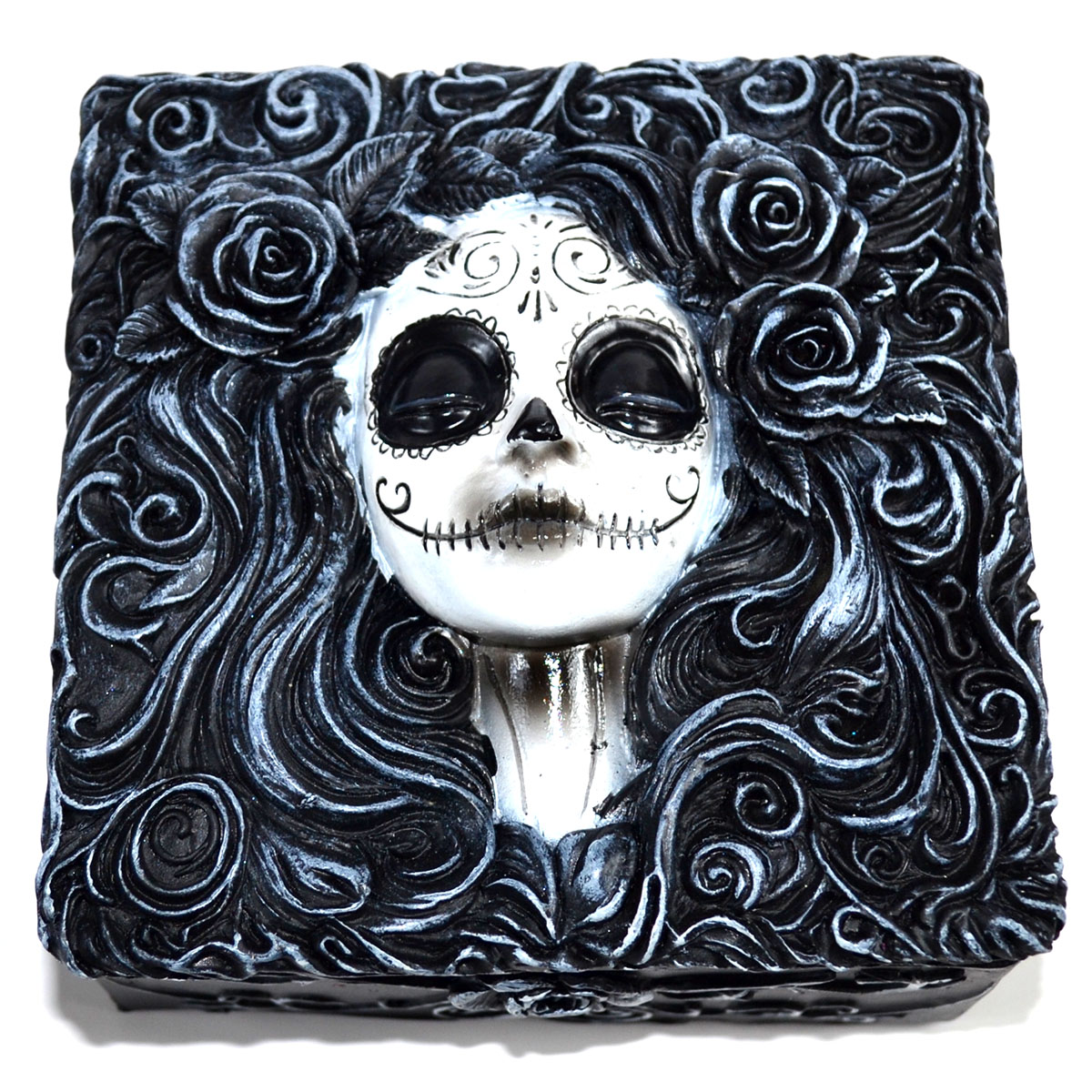
A resin box showing a white-faced Day of the Dead woman whose hair melts into black and grey roses, used to hold relics and offerings for the ancestors.
Quick Uses
- Ancestor Relics: Keep a lock of hair, a ring or a photograph of a loved one who has passed inside.
- Ofrenda Piece: Set it on your ancestor altar and place small offerings in it each week.
- Grave Dirt Keeper: Store dirt gathered respectfully from a family grave for later workings.
How to Use It
Witchcraft & Folk Magick
- Write the names of your dead on slips of paper and keep them inside, reading them aloud on Samhain and on 1 and 2 November.
- Place a few dried marigold petals in the box to call the dead home along the old scented path.
Hoodoo & Rootwork
- Keep graveyard dirt you paid for with coins or whiskey in the box, labelled with whose grave it came from.
- Rest a photograph of an ancestor inside with a pinch of tobacco when asking for their help with a family matter.
Ceremonial & Occult Magick
- Use it as a memento mori on your altar, a reminder of death to steady meditation on change and endings.
Demonology & Black Magick
- Store the materials for necromantic work here: bone, grave dirt, coffin nails and the written name of the dead you call.
- Keep a skull sigil or the seal of a spirit of the dead inside with a black candle stub between rites, sealing the box when the work is closed.
A Simple Working
- On the night of 1 November, set the box on a white cloth.
- Light a white chime candle for your ancestors.
- Place a photograph or name slip of someone you have lost inside.
- Add a few marigold petals and a pinch of sugar.
- Speak their name three times and tell them news of the family.
- Let the candle burn down beside the open box.
- Close the lid and keep it on your ancestor altar.
Pairs Well With
- Marigold Flowers: The traditional Day of the Dead flower for guiding spirits.
- Copal Resin: The incense burned on Mexican ofrendas.
- White Chime Candles: For short ancestor vigils.
- Graveyard Dirt: For deeper work with the dead.
What You Receive
One resin box with a Day of the Dead woman and black and grey roses on the lid, measuring 4 1/4″ x 4 1/4″.
Origin & Lore
Boxes and ofrendas of this kind serve one first purpose: honouring and remembering the dead, keeping their relics and their memory close at hand.
Día de Muertos is kept in Mexico on 1 and 2 November, when families build ofrendas with marigolds, candles, photographs and favourite foods, and visit the graves of their kin.
The elegant skull-faced woman descends from La Calavera Catrina, an etching by the printmaker José Guadalupe Posada made around 1910. Diego Rivera later painted her into his mural Dream of a Sunday Afternoon in the Alameda Park.
Did You Know?
The famous skeleton lady La Catrina began as a satirical etching by José Guadalupe Posada mocking Mexicans who copied European high fashion.
Related products

All Oils

All Herbs
All Herbs