


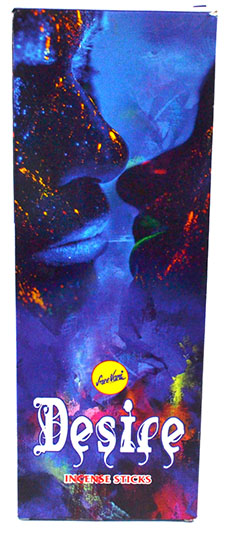

Desire incense sticks
$9.85
A smoke for stirring longing
Stick incense for desire, made for attraction, seduction and passion spells, burned to set the mood and stir longing.
Quick Uses
- Friday spells: burn a stick on a Friday beside a red or pink candle carved with both your names.
- Bedroom: light one an hour before a date so the room holds the scent.
- Name-paper: pass a crossed name-paper through the smoke before setting it under a red candle.
- Lingering scent: smoke a handkerchief or garment and give it to the person you want thinking of you.
How to Use It
Witchcraft & Folk Magick
- Friday spells: burn a stick on a Friday, Venus’s day, beside a red or pink candle carved with your name and your lover’s.
- Bedroom atmosphere: light one an hour before a date so the room holds the scent.
- Self-love: burn it during a bath with rose petals to stir confidence and desirability in yourself.
Hoodoo & Rootwork
- Name-paper: write your lover’s name and cross it with your own, then pass it through the smoke before putting it under a red candle dressed with love oil.
- Lingering scent: smoke a handkerchief or a piece of clothing and give it to the person you want to think of you.
A Simple Working
- On a Friday night, carve your name on a red chime candle.
- Dress it with a little rose oil.
- Scatter dried rose petals in a circle around the candle holder.
- Light the candle and one stick of Desire incense from it.
- Say plainly what you want to feel and to be felt.
- Let the candle burn out and keep a few of the petals in your pillowcase.
Pairs Well With
- Red chime candle: for passion and lust.
- Rose petals: the flower of Venus.
- Rose oil: for dressing candles and skin.
- Damiana: a herb traditionally used in lust work.
What You Receive
Desire stick incense, a box of 6 packs with 20 sticks in each (120 sticks).
Origin & Lore
Desire is a modern formula incense for love and lust work. Scented smoke and perfume have been tools of seduction since antiquity, burned in bedchambers and temples of the love goddesses, and in modern witchcraft an incense like this sets the atmosphere for attraction spells and for the bedroom itself.
When Cleopatra sailed up the Cydnus to meet Mark Antony, Plutarch says the scent of her perfumes reached the riverbanks before she did. Desire has always worked through the nose first.
Plutarch’s Life of Antony describes Cleopatra’s barge with a gilded stern, purple sails and silver oars, and wonderful scents from many censers spreading to the banks. The Greek Magical Papyri preserve dozens of agōgē spells, rites to draw a desired person to the one who performs them, often calling on Aphrodite or Eros.
Did You Know?
In Latin, venus was also an ordinary noun meaning sexual love or charm, which is how the goddess’s name gave English words such as venereal.
| Weight | 0.8 lbs |
|---|
Related products


