



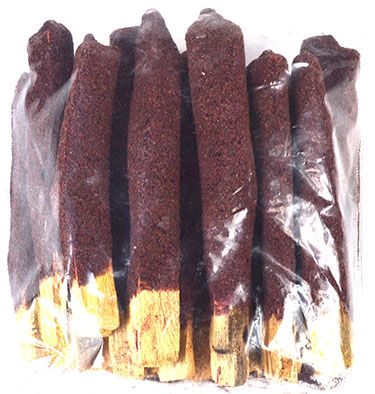
Dragon’s Blood Palo Santo Dipped Sticks (25 Pack)
$50.55
The Power Booster in Smoke
Palo santo sticks dipped in dragon’s blood incense, the deep red resin scent practitioners burn to add power, protection and fire to any working.
Quick Uses
- Boost a Spell: Burn one alongside any working that needs more force.
- Ward the Home: Walk a lit stick around the walls clockwise.
- Courage: Light one before a hard conversation.
- Uncrossing: Burn one daily for seven days after a run of bad luck.
How to Use It
Witchcraft & Folk Magick
- Burn a stick while writing a sigil to give it strength.
- Smoke a protection charm bag before closing it.
- Smoke new tools to empower them before first use.
Hoodoo & Rootwork
- Burn one during an uncrossing bath to break crossed conditions.
- Light one beside a red candle for a strong love or passion working.
- Smoke yourself before going to court or into conflict.
Ceremonial & Occult Magick
- Burn it as a Mars incense in rites of strength.
- Use it during banishing rituals to fill the space with fire.
- Use it to fumigate talismans of Mars.
Demonology & Black Magick
- Offer the smoke to a spirit as a strong, well-liked offering during evocation.
- Burn one while charging a curse or binding to empower it.
A Simple Working
- Draw a protective symbol on paper with a red pen.
- Set a red candle on top of the paper.
- Light a dragon’s blood stick and pass the candle through the smoke.
- Light the candle and state what you are guarding against.
- Let the stick burn out in a heatproof dish.
- When the candle is done, fold the paper and keep it by the door.
Pairs Well With
- Red Candles: For power and passion work.
- Dragon’s Blood Ink: For writing seals and sigils.
- Black Salt: For warding the threshold.
- Garnet: A red stone of fire and strength.
- Black Candles: For warding and banishing.
What You Receive
One package of 25 palo santo sticks dipped in self-igniting dragon’s blood incense powder, made to burn longer than a standard palo santo stick.
Origin & Lore
Dragon’s blood is a red resin taken from several plants, including Dracaena and Daemonorops species, and has been traded since antiquity as a dye, varnish and incense. In modern witchcraft it is the classic booster added to strengthen any spell.
Palo santo, Spanish for holy wood, is the fragrant wood of Bursera graveolens, a tree of the dry forests of South America, burned in Andean folk practice for cleansing and blessing.
Did You Know?
Pliny the Elder wrote that dragon’s blood came from the battle of a dragon and an elephant, which is the legend behind its name.
Related products


